
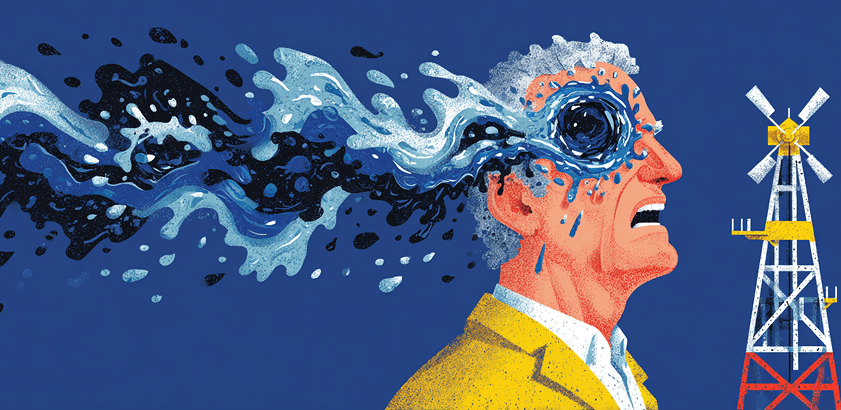
The Sound That Didn't Come Back

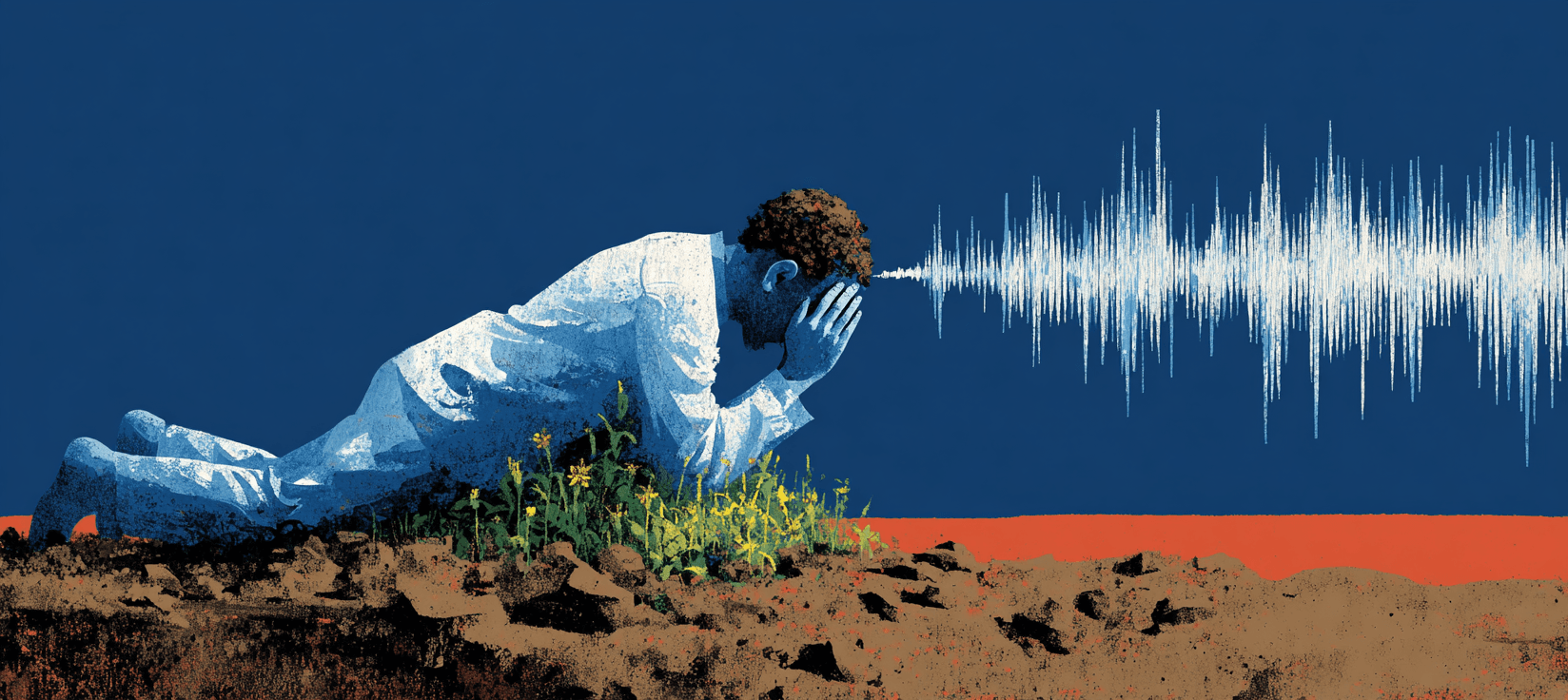
Wind over grass and wind over bare sand make different sounds. Each prairie species — bluestem, switchgrass, sandreed — bends at its own frequency, so intact grassland produces a weave of living friction, dozens of notes layered into one texture. Strip the grass away, expose the dunes, and that weave collapses into something thinner. Something that travels further. The extra range is full of nothing.
In the Nebraska Sandhills of 2034, eight years after fires stripped the dunes to white sand, a woman lies awake and listens for something the air no longer carries. Her husband sleeps beside her, undisturbed. He has never heard what she's missing.
The Sound That Didn't Come Back
Wind over grass and wind over bare sand make different sounds. Each prairie species — bluestem, switchgrass, sandreed — bends at its own frequency, so intact grassland produces a weave of living friction, dozens of notes layered into one texture. Strip the grass away, expose the dunes, and that weave collapses into something thinner. Something that travels further. The extra range is full of nothing.
In the Nebraska Sandhills of 2034, eight years after fires stripped the dunes to white sand, a woman lies awake and listens for something the air no longer carries. Her husband sleeps beside her, undisturbed. He has never heard what she's missing.
Field Recording

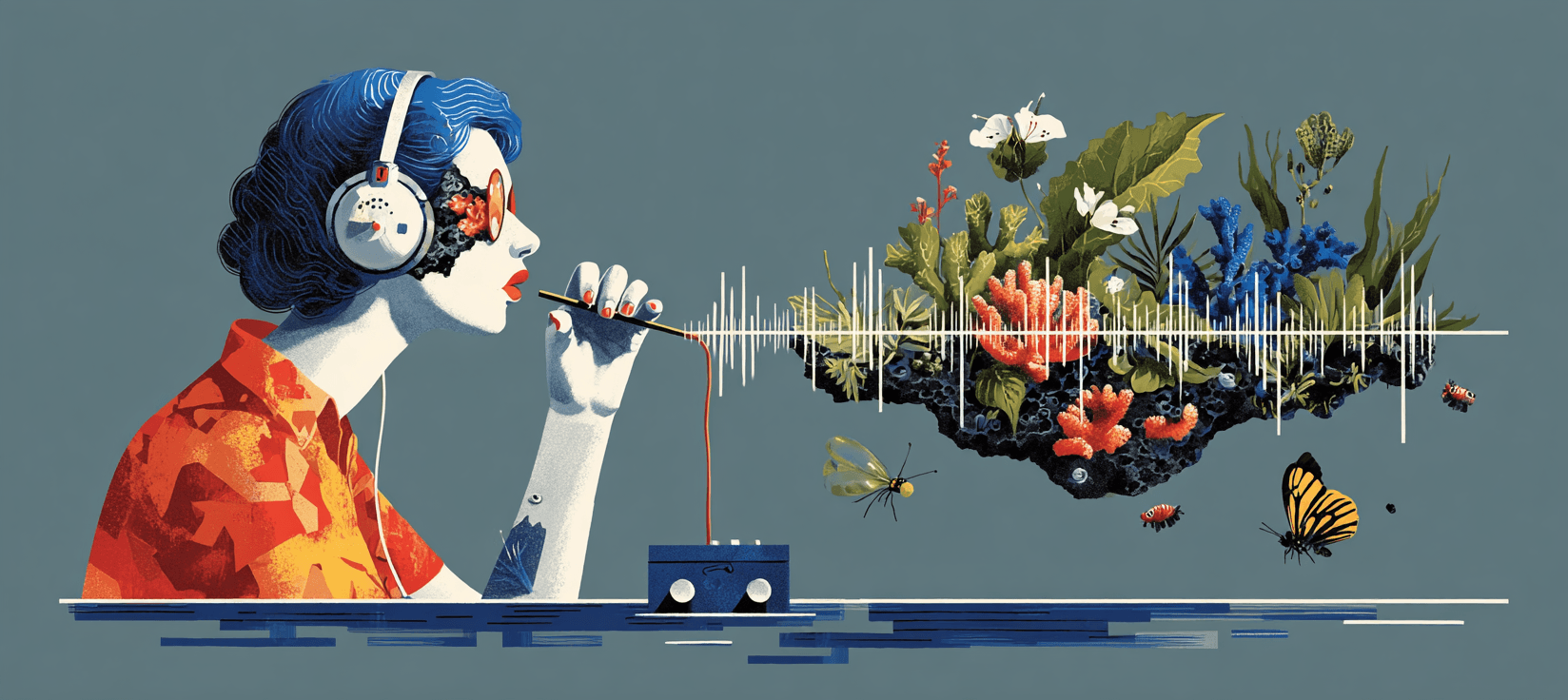
Your ears normalize. Stand on a skiff long enough and the wind and the hull slap disappear, your brain filing them as nothing. A hydrophone sits at the sensitivity you set and captures what's present in the frequency range. The waveform looks like a line that should have more activity on it.
October 2031, Biscayne Bay. Eighty-nine degrees on the water, visibility maybe four feet. A sound engineer swims a hydrophone out to a patch reef and listens to what's left of the biological band. She has fourteen terabyte drives in a case. She keeps meaning to make copies.
Field Recording
Your ears normalize. Stand on a skiff long enough and the wind and the hull slap disappear, your brain filing them as nothing. A hydrophone sits at the sensitivity you set and captures what's present in the frequency range. The waveform looks like a line that should have more activity on it.
October 2031, Biscayne Bay. Eighty-nine degrees on the water, visibility maybe four feet. A sound engineer swims a hydrophone out to a patch reef and listens to what's left of the biological band. She has fourteen terabyte drives in a case. She keeps meaning to make copies.

A Retired Meteorologist Who Read Weather by Sound on the Evening She Can No Longer Hear
CONTINUE READINGSound as Unknown
Mila asked because of a book. A picture book from the library sale where a dog sleeps on a porch while it rains. "What does that sound like?"
Her mother turned from the counter. "Like the shower. But everywhere."
"The whole bathroom?"
"The whole house."
Mila thought about this. "Like the cooler?"
"No. It speeds up and slows down on its own."
Mila nodded the way she did when she planned to memorize something she didn't understand. Her mother turned back to the sink and ran the faucet over the tomatoes.
The Acoustic Record

Past Articles

She squeezed the soil sample in her fist and it held shape for a second, then fell apart. Six hundred and forty acres wa...
Two houses on the same block in Galveston. One up on new pilings, concrete columns pale against old siding. The other on...
Eighty-one degrees at 2 AM. The floor vents exhale salt and rot. A couple in coastal North Carolina has found a Google D...
A cupped palm held under a spring weir, counting seconds. His father taught him this measure — how long the water takes ...