

When Two Crises Share a County but Not a Plan


Eighty-eight percent of the people who died indoors from heat in Maricopa County last year had an air conditioning unit in their home. Seventy percent of those units weren't running. Follow the thread from that room outward and you hit drought-depleted reservoirs, a grid squeezed from both ends, and a set of emergency systems that have never once shared a map. New research published last week identifies the mechanism. Two stressors arriving together compound in ways planners never modeled. Maricopa County is already living inside the math.
When Two Crises Share a County but Not a Plan
Eighty-eight percent of the people who died indoors from heat in Maricopa County last year had an air conditioning unit in their home. Seventy percent of those units weren't running. Follow the thread from that room outward and you hit drought-depleted reservoirs, a grid squeezed from both ends, and a set of emergency systems that have never once shared a map. New research published last week identifies the mechanism. Two stressors arriving together compound in ways planners never modeled. Maricopa County is already living inside the math.
The Research
Compound Hot-Dry Extremes Amplify Disproportionate Climate Risks for Low-Income Nations
Simulations driven by natural forces alone showed no significant trend, isolating human emissions as the sole driver of doubled compound extremes.
Single-hazard models miss the multiplier: simultaneous heat and drought spike wildfire risk, crop failure, and mortality beyond their individual sum.
The Research
The Implications of Overshooting 1.5°C on Earth System Tipping Elements
Greenland melt freshens the North Atlantic enough to weaken ocean circulation, which then destabilizes monsoon patterns and Amazon rainfall in sequence.
Limiting how long temperatures exceed thresholds gives slow-responding systems like ice sheets a narrower window to begin irreversible collapse.
The Justice Math
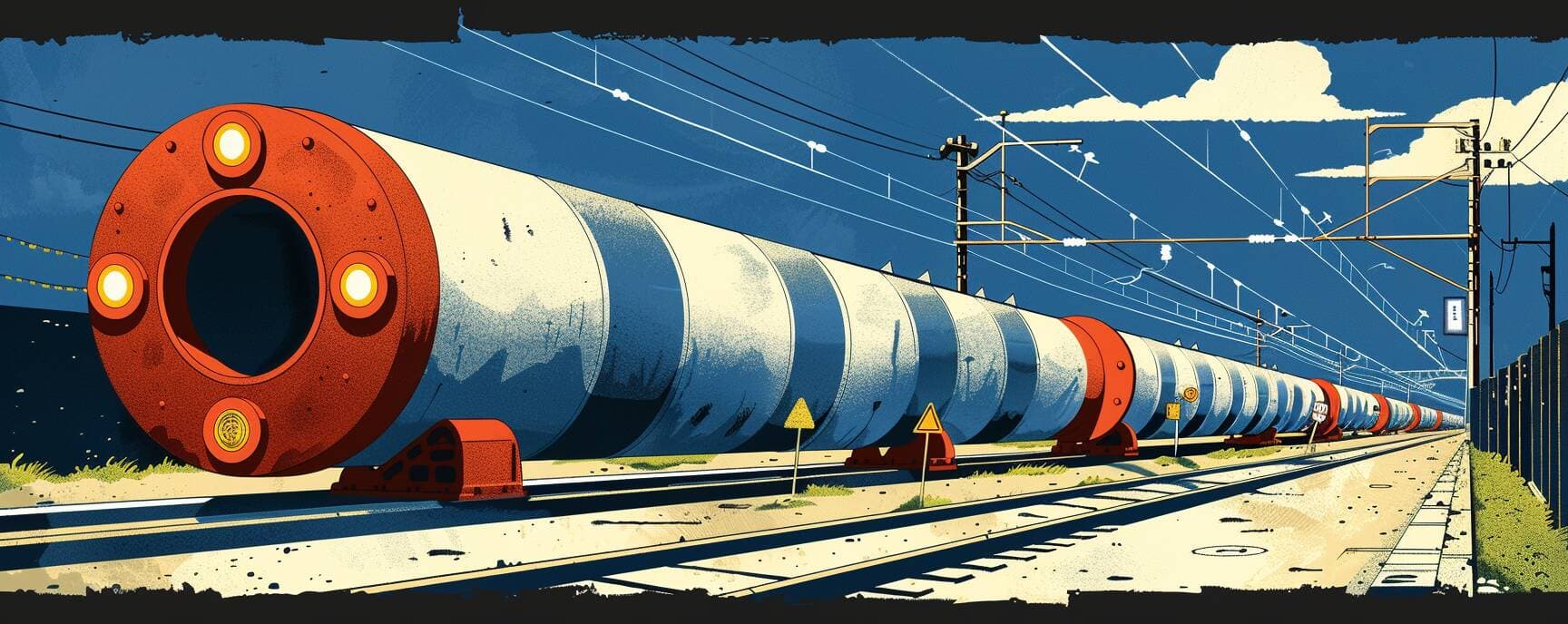
A study published April 7 in Geophysical Research Letters reduces climate injustice to brutal arithmetic: the cumulative lifetime emissions of roughly 1.2 average US citizens are enough to push one additional person into compound hot-dry extremes by 2100. Not heat alone. Heat and drought together, collapsing water and food systems simultaneously, concentrated in low-income tropical countries that barely register in the emissions ledger producing them.
Monica Ionita, the study's senior author at the Alfred Wegener Institute, expected the findings to show maybe 10 or 15 percent of the global population affected. The number came back at nearly 30 percent. "By the end or middle of the century, maybe my children will not be able to experience the life that I have now," she said. A climatologist running the models and finding her own family inside them.
Further Reading


Past Articles
In 2023, more than 300 Texans died from heat, the most since the state began tracking. The grid that nearly collapsed du...
In 2023, San Antonio hit 75 days above 100°F. No president flew in. No anchors stood in anybody's yard. Insurance premiu...

In Western fire country, every decision traces back to a number. Whether a prescribed burn gets approved in Jackson Coun...

Rain at 10,000 feet in the Idaho Sawtooths. Rain in the Bridger Range above Bozeman, midwinter, where snowpack is suppos...