

The Application Asks Tribal Health Departments to Choose Which Threat Might Kill Their Neighbors First

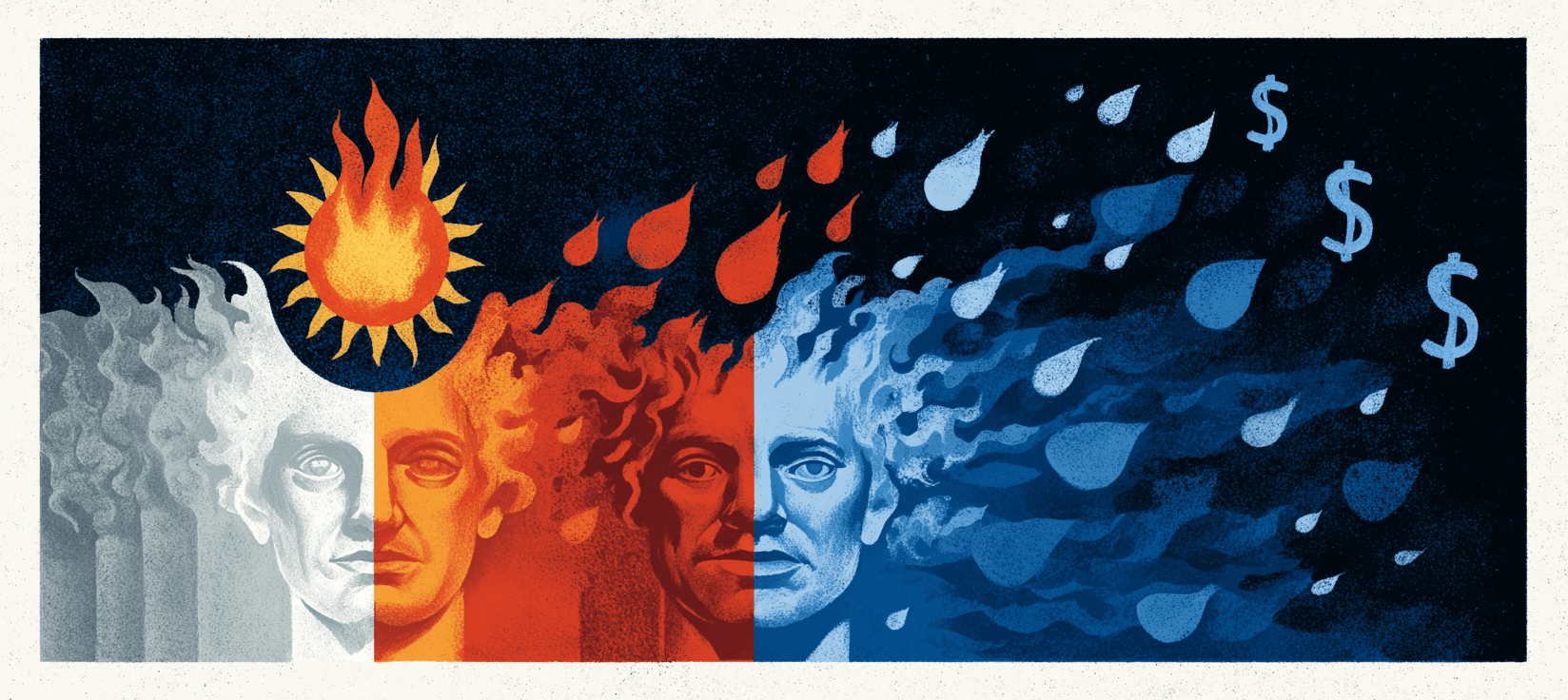
At Tule River Indian Reservation, the vulnerability framework maps how everything connects. The valley traps wildfire smoke against mountains. The river floods when storms hit. Limited transportation means elders can't evacuate when air quality crashes. Housing without filtration means they breathe smoke inside their homes. Heat waves. Flooding. Fire. All of it documented, all of it getting worse.
The National Indian Health Board application that arrived in November offers up to $20,000 for six months of climate health adaptation. Pick your focus: wildfire, heat, or flooding. Deadline December 19th. Funding ends in July—right when fire season peaks. Tribal health departments are deciding which threat to name. The threats don't take turns.
The Application Asks Tribal Health Departments to Choose Which Threat Might Kill Their Neighbors First
At Tule River Indian Reservation, the vulnerability framework maps how everything connects. The valley traps wildfire smoke against mountains. The river floods when storms hit. Limited transportation means elders can't evacuate when air quality crashes. Housing without filtration means they breathe smoke inside their homes. Heat waves. Flooding. Fire. All of it documented, all of it getting worse.
The National Indian Health Board application that arrived in November offers up to $20,000 for six months of climate health adaptation. Pick your focus: wildfire, heat, or flooding. Deadline December 19th. Funding ends in July—right when fire season peaks. Tribal health departments are deciding which threat to name. The threats don't take turns.
Studies That Actually Matter
Warm-Water Coral Reefs Have Collapsed Permanently
We moved from "approaching a tipping point" to "we crossed it"—the difference between warning and obituary.
Coastal communities lose both their protein source and their natural storm barrier, forcing impossible relocation decisions.
Studies That Actually Matter
The Planet Is Darkening Faster Than Models Predicted
Cloud feedback turned out far more dramatic than anticipated, creating an acceleration loop nobody fully modeled.
Your timeline for deciding about air conditioning upgrades, drought-resistant landscaping, or whether to stay put shrinks considerably.
Studies That Actually Matter
Even Jamaica's Preparation Couldn't Stop Hurricane Melissa
Preparation reduces casualties but can't prevent massive property destruction when storms exceed infrastructure design thresholds.
If you're weighing whether to stay in a vulnerable area, the question becomes what loss you'll accept, not whether you can adapt enough.
Studies That Actually Matter
Food Networks Fail in Cascades, Not Isolated Nodes
Multiple backup suppliers experience the same drought or flood simultaneously, collapsing the network despite diversification.
Single regional disasters now trigger nationwide price spikes and layoffs as interconnected systems amplify rather than absorb shocks.
What It Means Here

The climate projections everyone uses to plan infrastructure, set policy, and make life decisions assume Earth's plants will absorb about a quarter of human CO2 emissions. New research published in PNAS this November suggests those projections are wrong.
The problem is nitrogen. Plants need it to grow and sequester carbon, but soil microorganisms must convert atmospheric nitrogen first. Major climate models overestimate that conversion rate by roughly 50 percent, reducing projected plant CO2 absorption by 11 percent. Translation: the natural buffer we're counting on is weaker than calculated. Warming thresholds arrive faster than current timelines suggest.

Teaching Planetary Crisis to Teenagers Who Smell Wildfire Smoke Through Sealed Windows
CONTINUE READINGPast Articles
The contractor's bid sits on the kitchen counter next to the water bill and the printouts: $14,800 for desert landsc...

The job seekers show up every morning at the Glenville branch to use the computers. Kids come after school. Seniors ...

Peter Miller did the math in 2017 and it came out wrong for him. Four years from spat to harvest. Four years of mone...

The building inspector in Racine keeps two maps in her truck. One from 1977 saying where the water goes. One from 20...