

Learning to Float


Pressure builds behind my eyes and forty-three people around me transfer their weight to the balls of their feet. Perfect synchronization, no signal given. They're feeling something through their bare soles, their sinuses. The building shudders. Everyone smiles, already moving. I'm the only one standing still. The floor tilts. Bodies across the room lean left. Someone near the window bends their knees. The building levels. They just absorbed my stillness into their collective balance.
Learning to Float
Pressure builds behind my eyes and forty-three people around me transfer their weight to the balls of their feet. Perfect synchronization, no signal given. They're feeling something through their bare soles, their sinuses. The building shudders. Everyone smiles, already moving. I'm the only one standing still. The floor tilts. Bodies across the room lean left. Someone near the window bends their knees. The building levels. They just absorbed my stillness into their collective balance.
Two Paths, Same Crossroads

What the Ceremony Requires
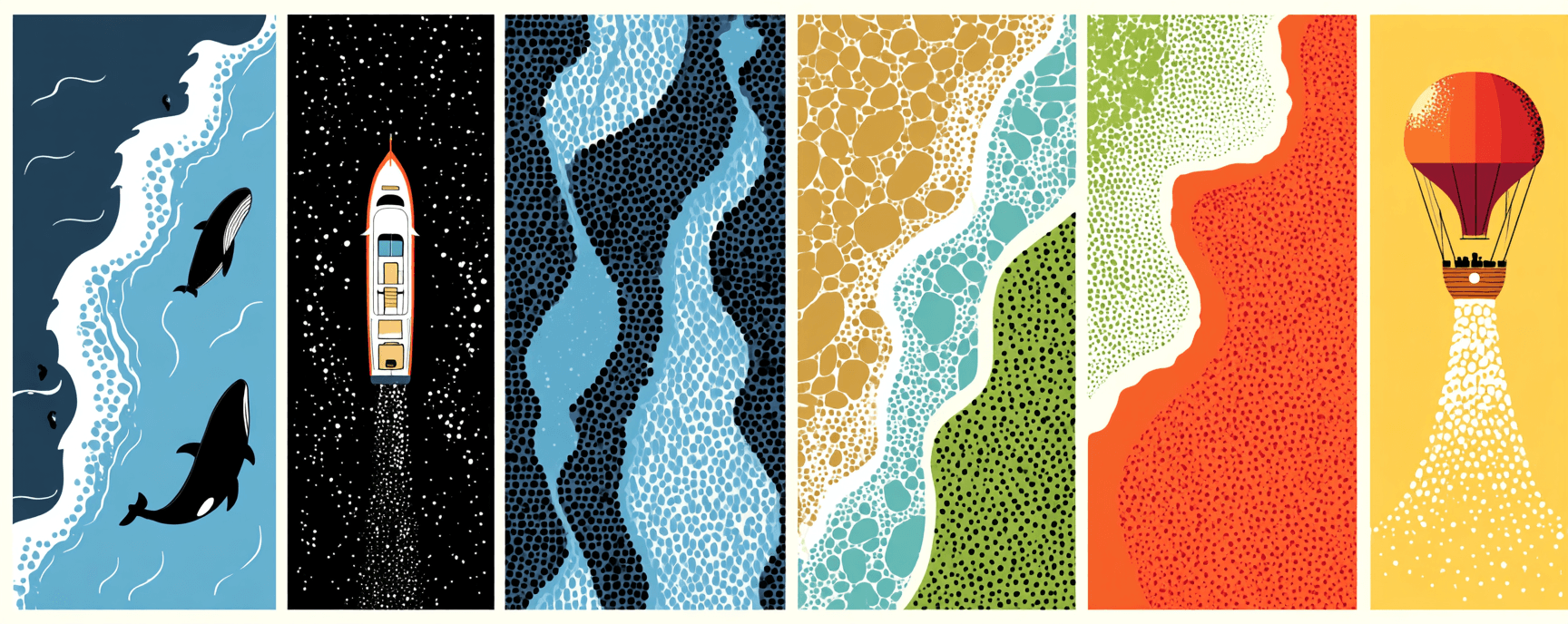
The tobacco goes into Superior first, always first, even when the whitefish are gone. Fifty springs of offering, of maintaining relationship with waters that no longer hold what they once did. Eleven fish for twenty people. The young ask why we still set nets in warming waters, still perform ceremony for species that may never return. But ceremony isn't about abundance. It's about refusing to forget.
Reading the Water
The monitoring data is clear: whitefish collapsing, bass thriving in Superior's warming waters. An Anishinaabe scientist documents the transformation site by site, watching species his grandfather never caught colonize traditional fishing grounds. Treaty rights guarantee harvest from these waters. Thirty-one bass where whitefish spawned. The ceremonial harvest pulls up empty nets while abundant populations swim past. Reading the water means seeing what's actually there.
Dispatch from a Future

The Char Dham Yatra no longer happens in summer. After the 2031 season when seventeen pilgrims collapsed from heat exposure on the mountain paths and a glacial lake outburst washed away part of the approach road, the Uttarakhand government moved the official pilgrimage window to March-April and October-November. No announcement, just revised permit schedules.
Now the temple town sits mostly empty during what used to be peak season. Hotels that once housed millions operate at quarter capacity. The priests who remain debate whether prayers offered outside the traditional calendar carry the same weight. My aunt, who made the journey every June for thirty years, refuses to go in spring. "It's not the same," she says, though she won't explain what she means.
The younger pilgrims adjust their work schedules around the new windows. The older ones remember when you could walk to Kedarnath in June without risking your life, and they mostly stay home. Above the temple, the glaciers continue their retreat. Anyone who's made the journey twice can see the difference.

Science Reshaping Plausible Futures
Farmers Can't Adapt Their Way Out
The assumption that farmers can innovate their way through warming if we just give them better seeds.
Canada, Russia, and northern China gain while U.S. and European heartlands decline.
Science Reshaping Plausible Futures
Atlantic Current Science Contradicts Itself Completely
If AMOC collapses, northern Europe gets colder while warming continues everywhere else. Radically different futures.
Scientists can't agree whether the change has already started, forcing scenarios to account for both possibilities.
Science Reshaping Plausible Futures
Climate Migration Models Miss Who Actually Moves
Young educated people move in response to climate stress. Older, poorer populations get trapped instead.
Climate impacts can eliminate the resources needed to migrate, making staying put a vulnerability rather than choice.
Science Reshaping Plausible Futures
Adaptation Tech Exists But Nobody's Deploying It
Not technology readiness but financing gaps and policy failures that keep proven solutions at pilot scale.
The next five years determine whether these technologies scale or remain expensive curiosities through mid-century.
Past Articles

Sari tastes copper and rust on her tongue—motorcycle exhaust distinct from diesel trucks, chemical sweetness from b...

The retrofit cost twenty-three thousand for sixty-three acres. A Kansas farmer installs mobile drip irrigation himse...

The screw fell from the hardware store owner's shaking hand, pinged against concrete, rolled under the shelving uni...
Marcus left Antigua last November with $43,000, choosing Trinidad over Miami, accepting lower wages for proximity to...