

When the Migration Routes Closed

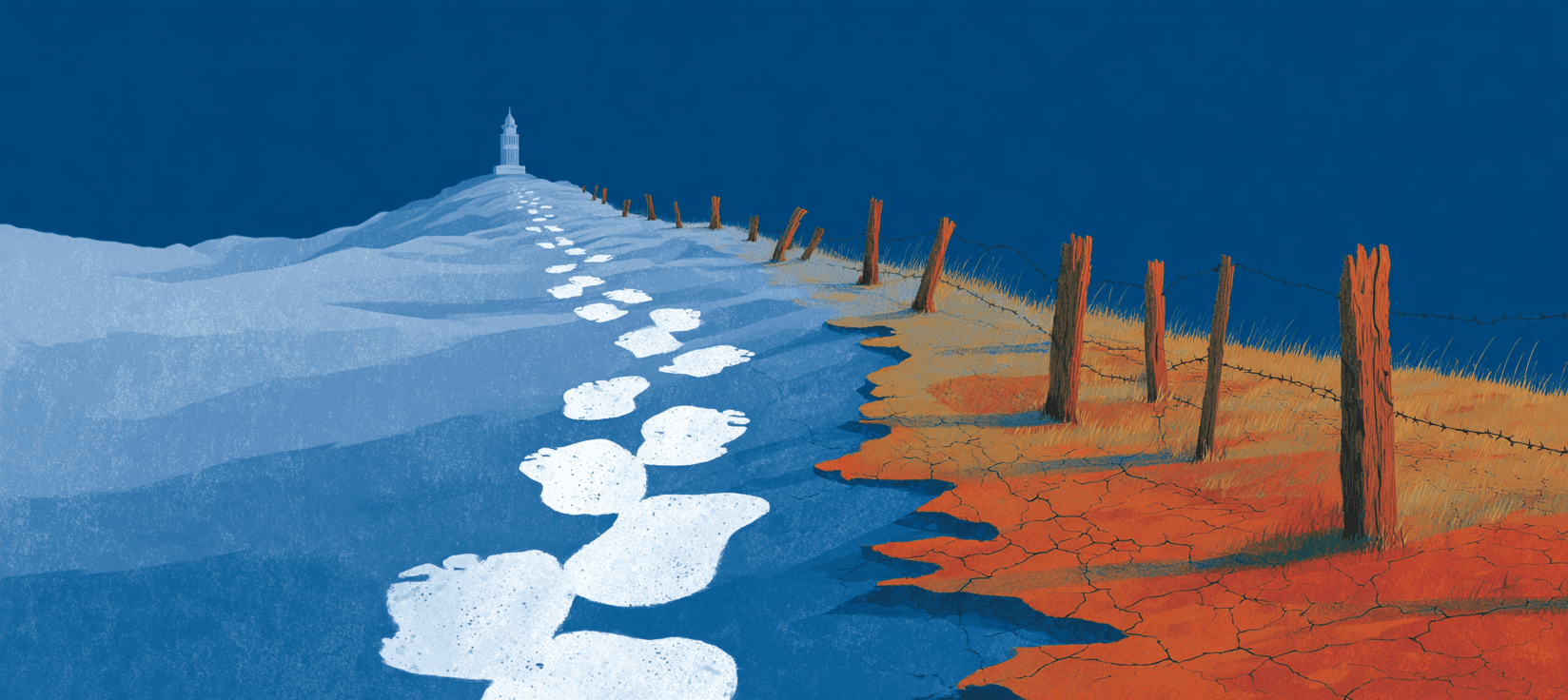
The goats died first in 1972, then the sheep, then the cattle across northern Mali. Tuareg families who had followed seasonal migration routes for centuries moved south to survive the drought. They thought it might be temporary—wait for rains, rebuild herds, return north. That's how the system had always worked.
They never went back. The families who migrated south settled in territories where they'd only ever passed through. Farmers who'd tolerated seasonal herders suddenly had permanent neighbors. The routes closed. Fifty years later, the geography that emerged from that closure is still killing people.
When the Migration Routes Closed
The goats died first in 1972, then the sheep, then the cattle across northern Mali. Tuareg families who had followed seasonal migration routes for centuries moved south to survive the drought. They thought it might be temporary—wait for rains, rebuild herds, return north. That's how the system had always worked.
They never went back. The families who migrated south settled in territories where they'd only ever passed through. Farmers who'd tolerated seasonal herders suddenly had permanent neighbors. The routes closed. Fifty years later, the geography that emerged from that closure is still killing people.

An Interview with the Ottoman Tax Collector Who Couldn't Collect Taxes That Didn't Exist
CONTINUE READINGHistory Echoes This Week
Altadena residents are knocking on doors with clipboards, tracking respiratory problems and cardiac events their neighbors experienced after last year's fires. Official counts miss most of it. Cedars-Sinai found heart attacks spiked 47% in the three months following the fires. Community groups are documenting toxic exposures from what UCLA researchers called the "toxic soup" of burning homes, lithium batteries, asbestos insulation.
This happened before. In 1978, when New York health officials dismissed concerns about Love Canal, Lois Gibbs went door-to-door herself. She surveyed hundreds of neighbors, documenting miscarriage clusters and birth defects that formal agencies had overlooked. Her informal data forced government action, relocated 833 families, created Superfund legislation. Grassroots health tracking works when official systems fail to see what's happening.
Historical Climate Insights
Societies Adapted More Than They Collapsed
Successful adaptation leaves fewer dramatic traces than collapse, skewing our sense of what climate change does to societies.
Flexibility and cooperation, not environmental conditions alone, determined which communities survived climate shifts.
Historical Climate Insights
Bronze Age Networks Predicted Who Survived Drought
Interconnected systems show no gradual warning signals before collapse. Everything works fine until it doesn't.
Civilizations with specific network positions survived the same drought that destroyed their more connected neighbors.
Historical Climate Insights
Broken Institutions Multiply Climate Risk
Historical precedents assume climate stability we no longer have. Four-degree increases remain plausible this century.
Climate impacts hitting societies with broken institutions and destabilizing factors. Dysfunction multiplies risk exponentially.
Historical Climate Insights
Infrastructure Designed for Yesterday Fails Tomorrow
Systems designed for historical conditions fail when events exceed past experience, like Texas grid during 2021 freeze.
Improved governance and integrated management in two cases, not just building bigger levees for bigger floods.
Past Articles

During the dust storms of 1935, farmers across the Texas Panhandle kept noticing the same thing at their fence line...
In the early 1830s, Dutch colonial officials sat in offices and made lists. Your village was on the list or it wasn...

In 1839, David Malo sat in a Lahaina classroom writing down everything he knew about traditional Hawaiian life—usin...
A 27-year-old mother sits at her kitchen table with a handwritten petition. Her son has epilepsy now, his white bloo...