
The VOR station at Salina went offline in March. Now you navigate by GPS or you don't navigate. I've been flying freight eleven years. I used to tune the frequency without thinking, let the needle swing, know where I was. Now I watch the screen. It works fine.
It's different.
The thermals come up anytime now. Used to be afternoons, predictable, you'd feel the drop and correct. Now they hit at dawn, at dusk, middle of the night sometimes. Your hands learn it. The yoke moves before you think about it. You feel the air change and your wrists adjust and the plane stays level. It's like the air has texture now. Ridges and pockets you can read through your palms.
I landed at Hays last week, another freight pilot was fueling up. We stood there watching the heat shimmer off the taxiway. He said the runway at Liberal buckled last month. I said I heard about that. He said they patched it but it'll go again.
I said probably.
We didn't say what we were both thinking. That the patches are temporary. That we're all making corrections for things that keep shifting. We just stood there. Then we filed our flight plans and left.
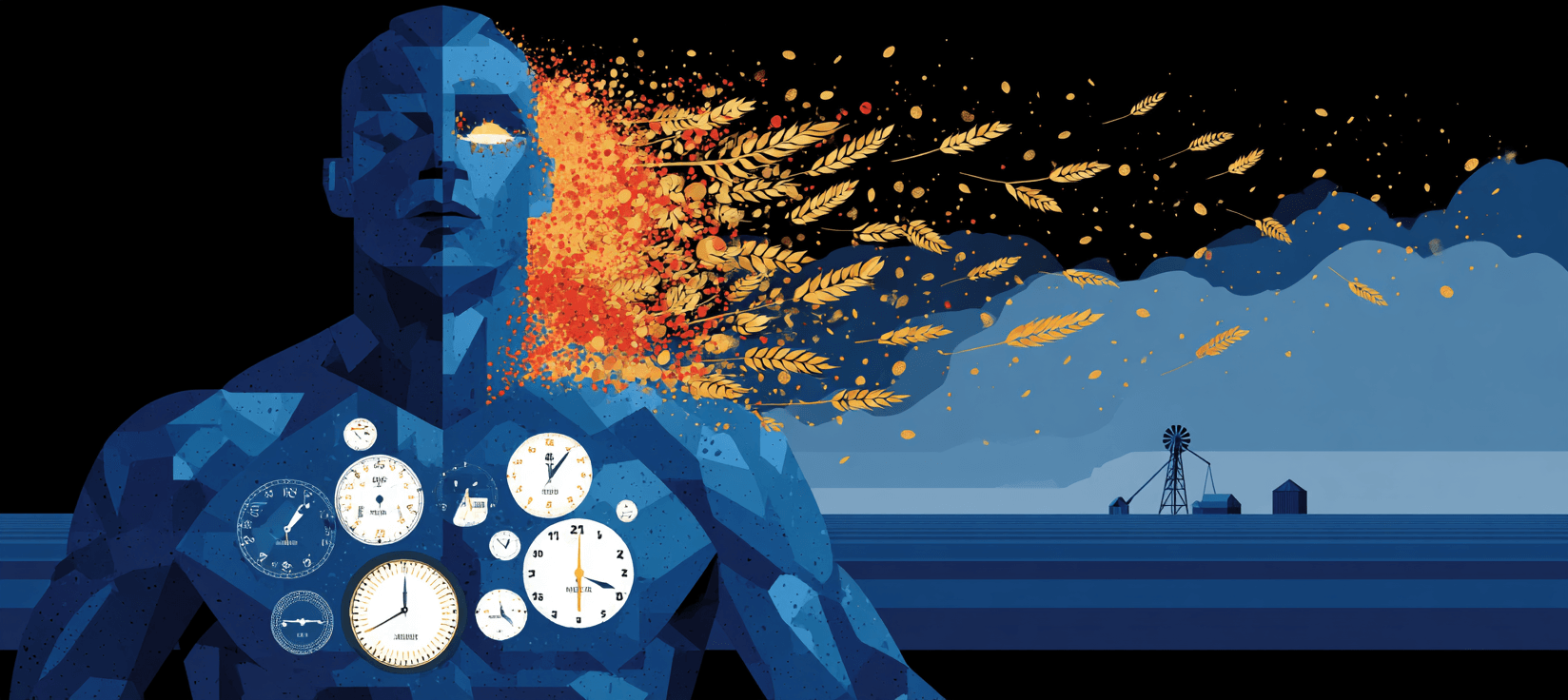
The sectional charts don't match anymore. The river south of the grain elevator is north of it now. Or the grain elevator moved. I use the charts for airspace and frequencies. For the ground I use what I can see.
At night you navigate by lights. The highway used to run clear from thirty miles out, steady line of white and red. Now there's gaps. Long stretches of dark. You find other references. Water towers. Cell towers. The glow from towns.
But you can see the wind now. Not the wind itself but what it does. The way dust moves in the dark, the way it catches light from the towns and makes patterns. Long spirals and eddies visible from five thousand feet. It's like the air is showing you its shape. I never saw that before. I don't know if it's more dust or different light or if I'm just paying attention to different things. But it's there.
The fuel burns faster. Maybe the heat, maybe the mixture, maybe I'm imagining it. I check the gauges every twenty minutes now. Land with more reserve. You build in margin.
The work has to get done. Medical supplies to Goodland tonight. Packages to Colby tomorrow. The freight moves or it doesn't. Somebody has to fly it.
Some of this I like better. The old navigation was clean. Tune the frequency, follow the needle, know exactly where you were. But it was abstract. Numbers on a dial. Now you navigate by what you can actually see. The shape of the land. The patterns in the dust. The way the lights arrange themselves. It's messier but it's more honest. You're reading the world instead of reading instruments. Your body does more of the work.
Not better or worse. Just different.
The weather briefings don't help much. They'll say VFR and you'll get there and find two miles visibility in haze. You file anyway. You go up and see what's there. You make corrections. Constant small adjustments. Feeling for the air's texture. Watching the dust patterns. Finding the lights in the gaps.
I've got the flight tonight. I'll check the VOR frequency at Goodland even though I know it probably won't come in. I'll watch for the highway lights and navigate by the gaps when they're not there. I'll feel the thermals through the yoke and let my hands make the corrections before my brain catches up. I'll watch the dust spiral in the dark and see what shape the wind makes tonight.
The plane knows the air. My hands know the yoke. The freight needs to move.
You figure out what works in the conditions you've got.
Things to follow up on...
-
Construction workers' bodily adaptation: Research shows that 50-70% of outdoor worker heat fatalities occur in the first few days of working in warm environments, before bodies can acclimatize to changed conditions.
-
Urban heat creates visible patterns: Cities now experience temperatures 15-20°F higher than surrounding vegetated areas during mid-afternoon, with tall buildings creating wind tunnels and stagnant air pockets that workers navigate daily.
-
Delivery workers face algorithmic pressure: Food delivery riders in Shanghai and Hangzhou experienced more than 20% increase in delays during heat extremes despite more orders per hour, with workers unable to take breaks without algorithmic penalties.
-
Bodies sense climate before instruments: Ethnographic research in Sicily found that farmers registered climate changes as embodied experience even when discursively denying climate change, touching fast-drying bedsheets and saying "It's like August!" in March.