

Keep Fishing, the Government Said


In the early 1950s, Minamata fishermen's hands went numb while hauling nets, dropped things without warning. Their cats convulsed and died. Dead fish floated in the bay. By 1957, researchers had confirmed the strange disease came from contaminated fish, from the factory's effluent. The government had to decide: ban fishing, or let families keep harvesting what was poisoning them. Their choice determined what fishing families could know about their own bodies, and what they couldn't.
Keep Fishing, the Government Said
In the early 1950s, Minamata fishermen's hands went numb while hauling nets, dropped things without warning. Their cats convulsed and died. Dead fish floated in the bay. By 1957, researchers had confirmed the strange disease came from contaminated fish, from the factory's effluent. The government had to decide: ban fishing, or let families keep harvesting what was poisoning them. Their choice determined what fishing families could know about their own bodies, and what they couldn't.

A Conversation with the Engineer Who Calculated How Much Sea to Steal
CONTINUE READINGHistory Echoes This Week

COP30 ended November 22nd without mentioning fossil fuels in its final agreement. Over 80 countries demanded a concrete transition roadmap. Russia and Saudi Arabia blocked any phaseout timeline. The United States didn't show up.
Sixteen years ago, Copenhagen 2009 collapsed in remarkably similar fashion. That summit drew 192 nations and 115 heads of state under the "Hopenhagen" banner. It produced a weak accord that wasn't formally adopted. Leaked draft texts confirmed what developing nations suspected: the real decisions happened in backroom deals while formal negotiations provided theater.
After Copenhagen's failure, it took six more annual conferences to reach Paris 2015. The pattern suggests COP30 isn't an ending. It's another stalled negotiation in a longer, messier process that grinds forward despite itself.
Historical Climate Insights
Centuries of Chinese Records Reveal Hailstorm Surge
Regions without comprehensive weather stations can mine their own historical records for climate trend data.
"Anecdotal" evidence becomes legitimate when you have enough of it and tools to analyze patterns systematically.
Historical Climate Insights
California's Epic Drought Cost Less Than Expected
Repeated crisis experience, not just infrastructure. California learned drought adaptation through doing it repeatedly.
Small water systems and ecosystems suffered while state-level numbers looked manageable. Aggregate resilience hides inequality.
Historical Climate Insights
Climate Migration Has Five Drivers, Not One
Our responses to climate change move people around as much as the impacts themselves do.
Helps separate migration from environmental damage versus migration from how we chose to respond to it.
Historical Climate Insights
Early Americans Thought They Could Fix Bad Weather
Early American climate modification ambitions mirror contemporary geoengineering debates. Same confidence in human control capacity.
Indigenous adaptation practices like controlled burning, eliminated as primitive. That amplifies our wildfire vulnerability today.
Past Articles

Lois Gibbs's hand rose toward her neighbor's door in spring 1978. The petition trembled. Who was she to demand acti...
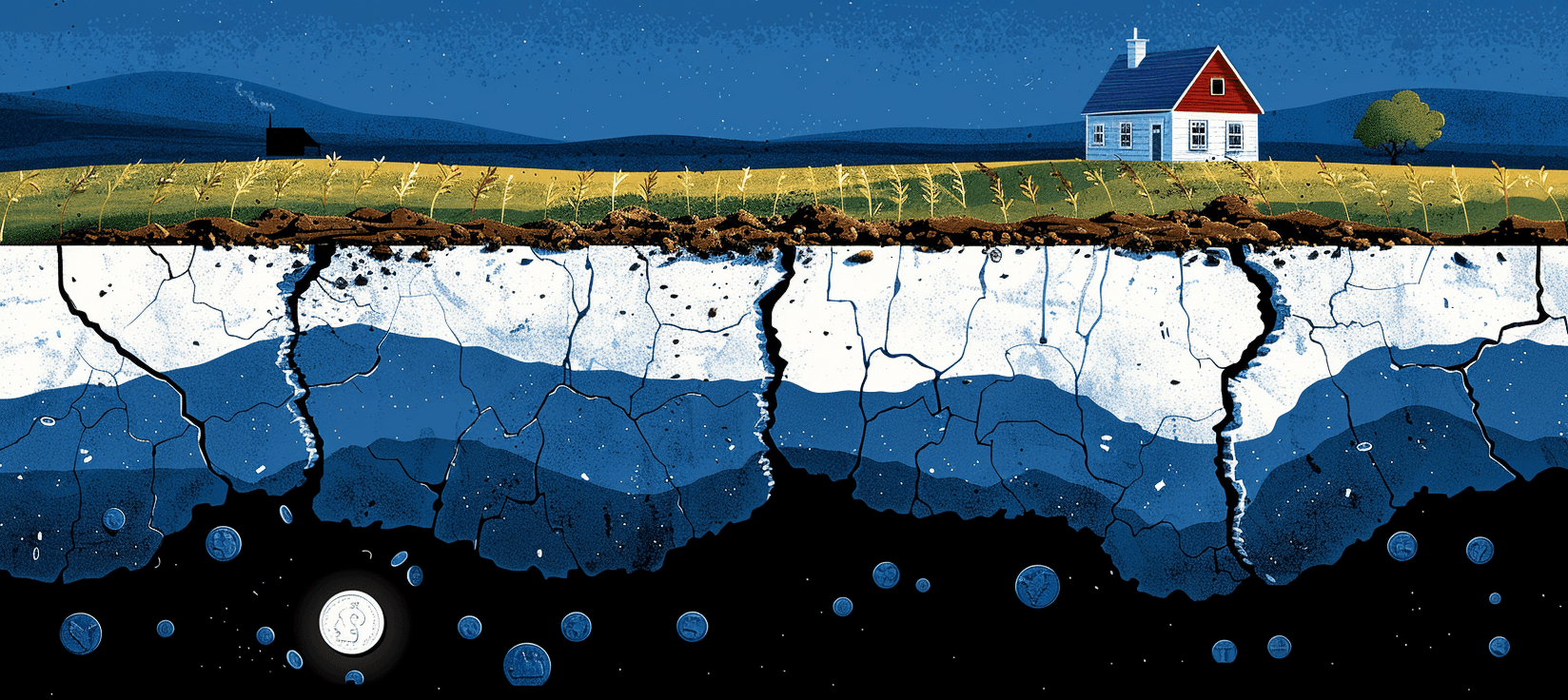
The man offered fifty cents an acre for rocks you couldn't see and couldn't use. Your corn was bringing thirty cents...

May 29, 1346. Philip VI of France issues an ordinance requiring his kingdom's forests to sustain themselves perpetu...

Keep circling back to those Spanish water judges in 1570s Peru who looked at fourteen-century-old canal systems and ...