

In southern Los Angeles County, the blocks are flat. Inglewood, Carson, Compton, Long Beach. Stucco walls, concrete driveways, maybe a strip of lawn browning under water restrictions. The nearest canyon is miles away. No chaparral. No narrow passes where Santa Ana winds accelerate into something lethal. These are neighborhoods where Black and Latino families built homeownership across decades of navigating redlining, predatory lending, and property tax assessments that never seemed to reflect the investment going in. The most combustible thing on the block is somebody's wooden fence.
And yet. Across these neighborhoods, homeowners are now insured by the California FAIR Plan, the state's insurer of last resort. A program designed for hillside properties in chaparral country. The FAIR Plan's own actuarial tables recognize the mismatch: urban southern LA County premiums average $300 to $400 a year, roughly one-tenth the statewide FAIR Plan average of over $3,000. The backstop is pricing these homes as low risk while simultaneously serving as proof that the private market considers them too risky to cover.
Both assessments arrive on official letterhead. A family is supposed to square them on their own.
Three Maps, Three Answers
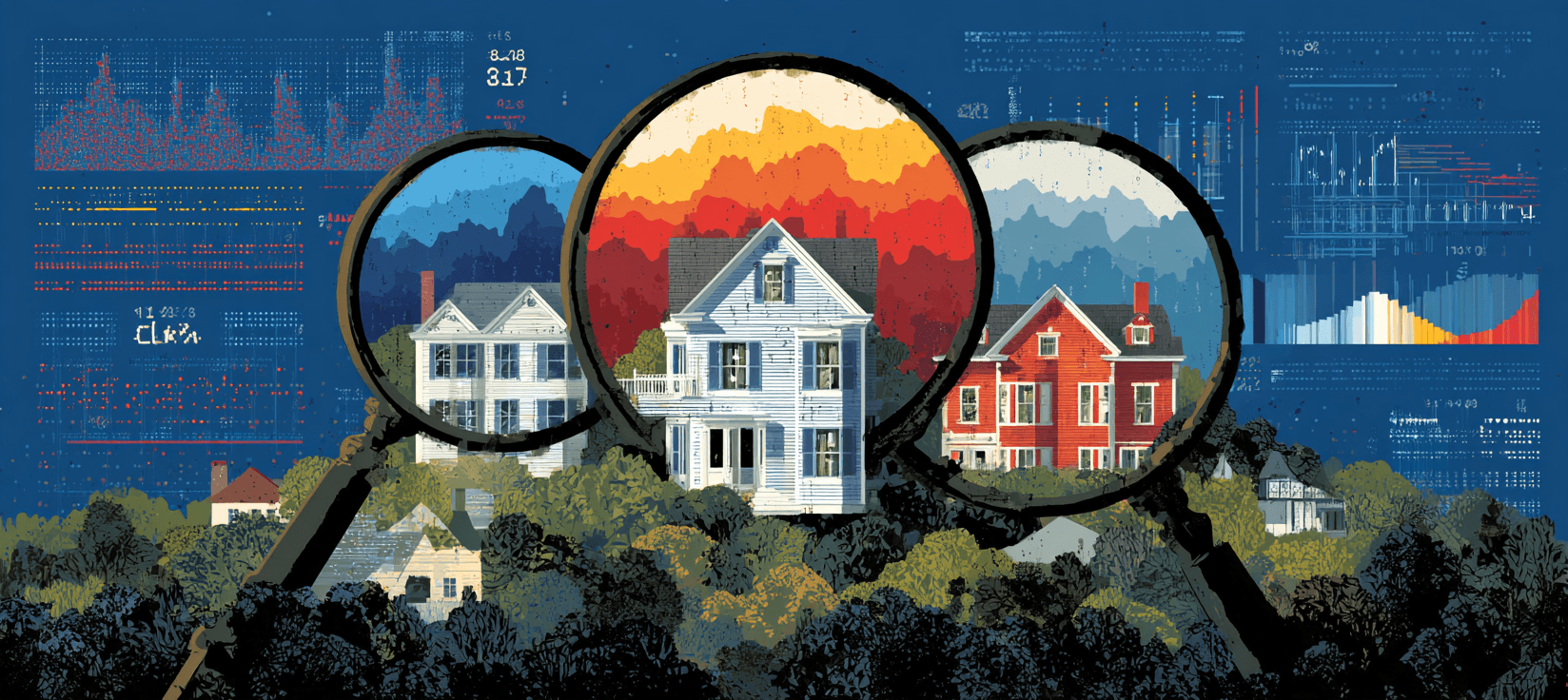
The infrastructure that determines "who faces wildfire risk" is three separate systems measuring different things. They don't agree.
CAL FIRE's hazard maps evaluate vegetation, terrain, and weather over a 30-to-50-year window. After the January 2025 fires, revised maps now classify essentially all of LA County as high or very high hazard, swallowing the urban core whole. First Street Foundation's Fire Factor simulates over 100 million wildfires under current and projected climate conditions, including ember transport from distant fires. By their model, nearly half of LA County homes face major or severe risk. A house with no vegetation within a mile can score high because of wind-carried embers from fires that haven't happened yet.
Then there are the private catastrophe models from Verisk and Moody's, the ones insurers use to decide who keeps coverage. These incorporate urban fire spread, correlated losses, and reinsurance costs. They are proprietary. No homeowner sees their score. A family in Carson trying to understand why they lost coverage can look up their CAL FIRE zone, check their First Street rating, and still have no access to the number that determined their fate.
| Risk system | What it measures | LA County verdict | Homeowner access |
|---|---|---|---|
| CAL FIRE FHSZ | Vegetation, terrain, weather (30–50 yr.) | Nearly all high/very high hazard | Public maps |
| First Street Fire Factor | Simulated wildfires incl. ember transport | ~50% of homes at major/severe risk | Free online lookup |
| Private CAT models (Verisk, Moody's) | Urban fire spread, correlated loss, reinsurance | Drives actual non-renewals | Proprietary. No access. |
A regulatory trap turned this disagreement into a coverage crisis. Until July 2025, California prohibited insurers from using forward-looking catastrophe models in rate filings. Rates had to reflect historical losses. So insurers ran internal models showing risk they couldn't legally price. Rather than write policies at rates they considered inadequate, they left. State Farm alone dropped roughly 72,000 California homes in 2024. The non-renewal letters cited wildfire risk without distinguishing between a property's actual exposure and the company's statewide portfolio math.
Communities in Inglewood or Long Beach where homeownership was already hard-won understand that distinction viscerally. Insurers don't recognize it at all.
Where the 63% Went
No institution resolves the contradiction. FHSZ maps say high hazard. FAIR Plan premiums say low risk. First Street says moderate to major. Private models say something nobody outside the company can verify. Fourteen percent of all FAIR Plan policies now sit in largely urban, lower-fire-risk zones, accounting for 28% of the plan's total exposure. The families stayed put. The models moved around them.
The January 2025 fires complicated things further. Moody's analysis found urban fire spread in closely built neighborhoods exceeded what traditional hazard maps anticipated. Smoke damage rendered homes uninhabitable miles from any flame. This partially validated the broader risk aperture of the CAT models. It simultaneously provided retroactive justification for non-renewals made years earlier, on different grounds, using models regulators hadn't approved.
In LA County, for every 100 policies non-renewed by private insurers in 2023, only 37 ended up on the FAIR Plan. The other 63 went somewhere the data doesn't track: uninsured, underinsured, or carrying coverage gaps they may not discover until they file a claim.
In neighborhoods where a house represents generational wealth built against structural odds, that invisible 63% is the crisis underneath the FAIR Plan's visible growth.
The Bill Arrives Before the Answer
FAIR Plan exposure in LA County hit $112.2 billion as of September 2024, growing 53% in a single year. The plan is requesting a 35.8% rate hike. When approved, those $300 urban premiums start climbing toward something that feels like a penalty for living in a city where three risk systems looked at the same block and produced three different answers.
FAIR Plan president Victoria Roach has acknowledged that relatively low pricing drew some urban homeowners in voluntarily because private insurance had become more expensive. But "voluntary" does strange work in a sentence where the alternative is paying twice as much or going without. The FAIR Plan only began publishing ZIP-level premium data in summer 2025, after the California Department of Insurance pressured it toward transparency. Until then, families couldn't even compare what they were paying to what their neighbors paid, let alone to what the models said about their actual risk.
The insurance market picked the most expensive interpretation. The families absorbing the cost never saw any of the models. They know what their block looks like. They know what their letter said. And they know, in the particular way that communities long familiar with institutional decisions made over their heads know, that the two don't match.
Things to follow up on...
-
The uninsured equity trap: Harvard Business School professor Ishita Sen found that rising costs are pushing households to insure only enough to protect the mortgage lender while leaving their own equity exposed, meaning they couldn't afford to rebuild after a fire.
-
Industry lobbied against oversight: A Capital & Main investigation found insurance industry groups actively argued against climate risk guidance developed by the body overseeing 97% of the world's insurance premiums, asserting that catastrophe events aren't frequent enough to require additional regulation.
-
FEMA's flood standard halted: The Trump administration ordered FEMA to immediately stop implementing the Federal Flood Risk Management Standard, which required federally funded construction to be elevated and strengthened against climate-related flood impacts, including sea-level rise.
-
Only two states require fire disclosure: Home sellers in 23 states have no obligation to report flood history to buyers, and only California and Oregon require any disclosure of fire risk, leaving most buyers without the information that might change their purchase.