

Risk She Can't Distribute


Three summer flow projections glow on Brenda Burman's laptop at 6:47 AM. Most optimistic: Lake Powell inflow at 52% of average. Dry conditions: reservoir drops below minimum hydropower by December. Current reality: already down 1.5 million acre-feet since January. Phoenix water officials need one number by October—which neighborhoods lose water first when cuts start January 2027. Burman runs Central Arizona Project, delivering Colorado River water to 6 million people. Arizona's already taken 18% cuts while Upper Basin states refuse mandatory reductions. Her phone rings. They're asking for the number she doesn't have.
Risk She Can't Distribute
Three summer flow projections glow on Brenda Burman's laptop at 6:47 AM. Most optimistic: Lake Powell inflow at 52% of average. Dry conditions: reservoir drops below minimum hydropower by December. Current reality: already down 1.5 million acre-feet since January. Phoenix water officials need one number by October—which neighborhoods lose water first when cuts start January 2027. Burman runs Central Arizona Project, delivering Colorado River water to 6 million people. Arizona's already taken 18% cuts while Upper Basin states refuse mandatory reductions. Her phone rings. They're asking for the number she doesn't have.

Waiting for Fire

The firefighters in George Ducker's February training class can read conditions as well as anyone. Snowpack at half normal. Fuels dry since summer. Eastern New Mexico already flagged for above-normal fire potential, and it's still winter.
They pass their pack tests knowing the math doesn't work. Federal agencies are short 4,500 firefighters. The temporary pay raise expires in September. PTSD runs four times higher in their profession than the general population.
They'll deploy anyway. Twelve-hour days stretching into fourteen-day rotations, working a season that's already written in the drought maps and fuel moisture readings. Professional knowledge doesn't ease the weight. Sometimes it just means you see it coming.
Land Decisions

The Island That Shouldn't Be There
Francis "Boo Boo" Bird spent twenty-five years learning every pond and spring on his Montana ranch. Then an island appeared in water that was supposed to be there. Springs that ran a quarter century went dry. Now he's deciding which cattle to sell from the herd he built over decades—which bloodlines to abandon, which breeding decisions to reverse—and nobody can tell him if he's cutting too deep or not deep enough.

The Arithmetic of Disappearing Water
The allocation letter from Westlands Water District shows 55 percent. Last time it showed zero. Jim Anderson runs the numbers again: soil quality, crop value, irrigation efficiency, debt service. Which fields can survive on reduced water? Which permanent crops pencil out when the best-case projection requires fallowing half a million acres by 2040? He calculates and recalculates, knowing the answer won't be right until it's too late to change it.
Further Reading


Past Articles

The sixth grade classroom stays dark all day. Not dim—dark. Lights off, windows covered with paper, fans running con...
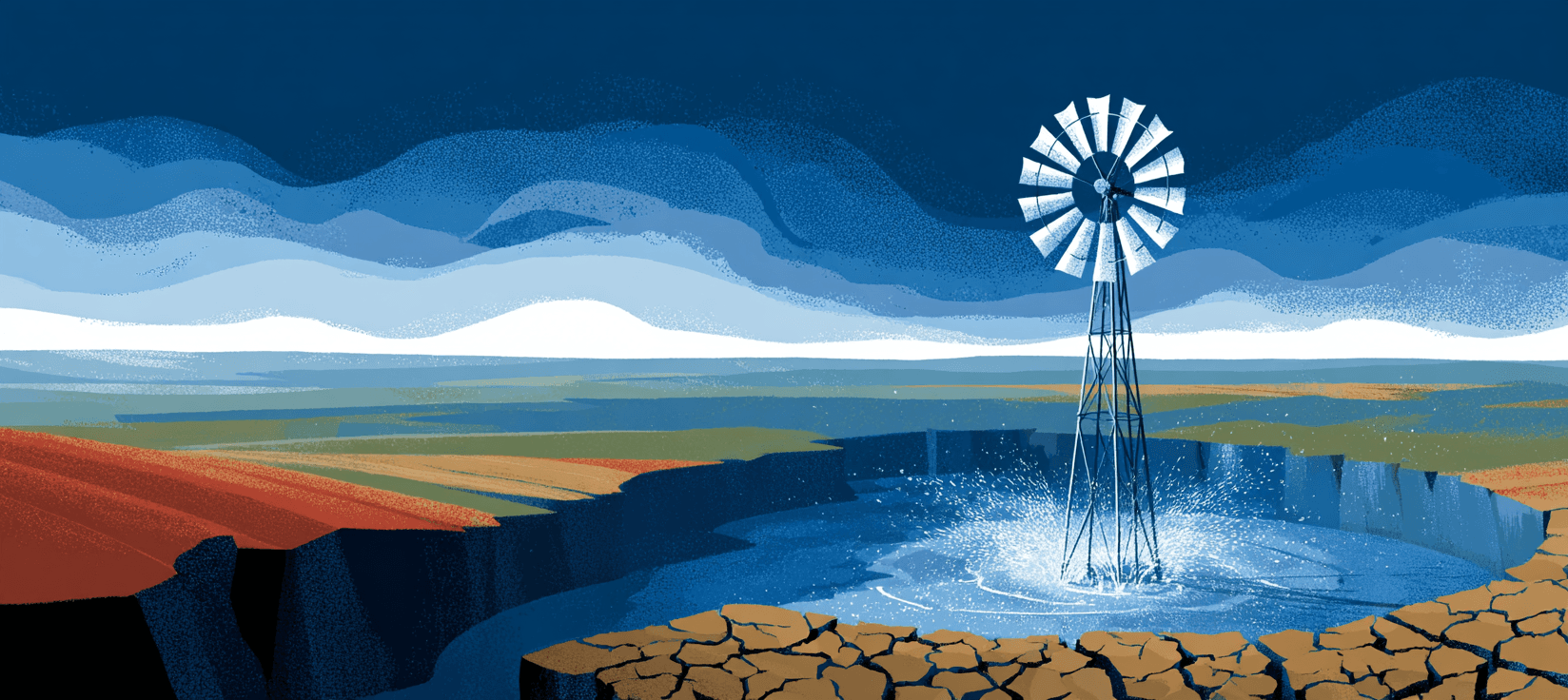
Paul Thomas's irrigation ponds went dry last summer—June, then August—for the first time in over a decade. He lost ...

Median household income in Richland Parish, Louisiana: $30,000. Cotton gins that closed since 1990: seven out of eight. ...

We left Oakland five years ago. The smoke in California was part of why. Bellingham had more water, cooler summers, ...