
When the Houses Go Up

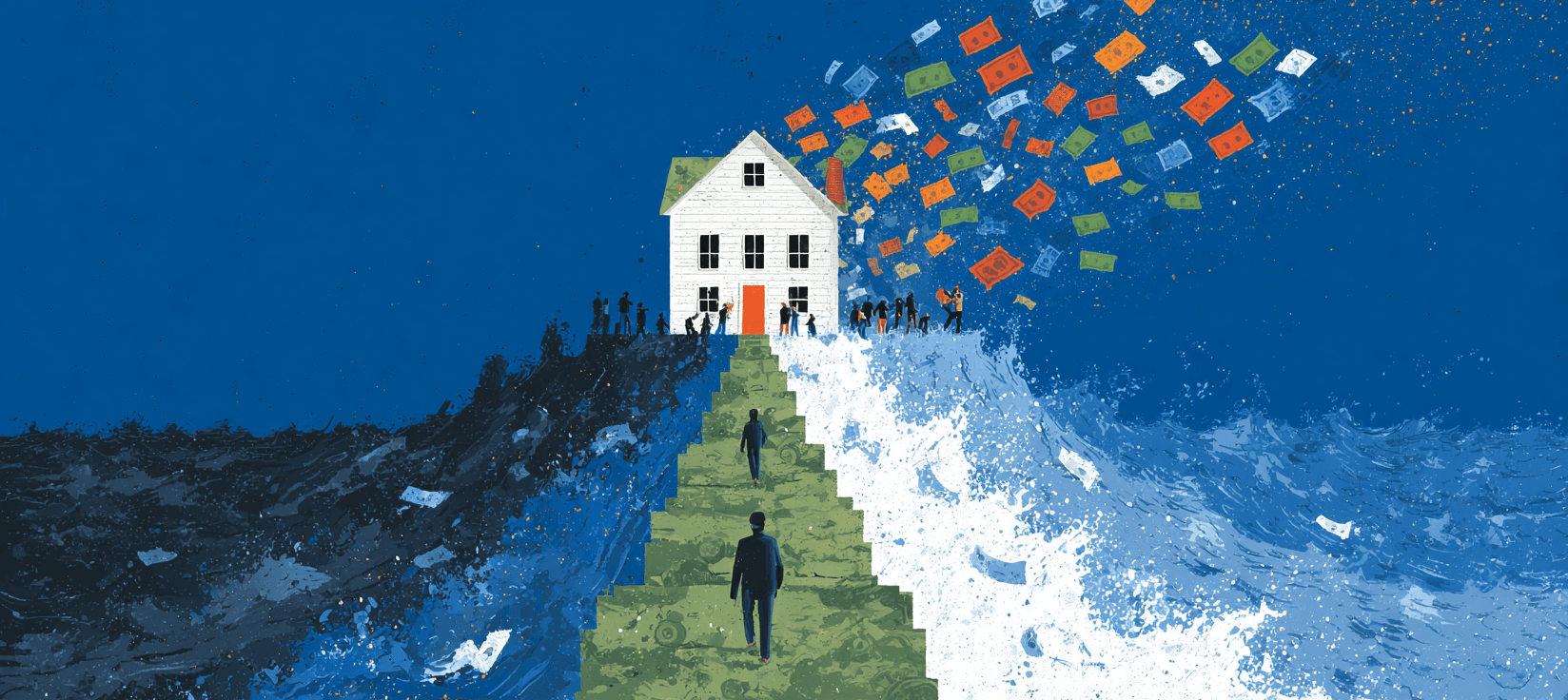
Lia Frenchman's house shakes when big waves hit the seawall at high tide. She bought it in 2020 knowing First Avenue sits closest to the ocean, knowing king tides flood the street every winter now. Thirty-five homes are under construction half a mile uphill—the Quinault Indian Nation's first residential building in its decades-long move from tsunami zone to higher ground. Frenchman has a good job. She doesn't know if she can afford one. The homes are rising. She has to decide whether to try.
When the Houses Go Up
Lia Frenchman's house shakes when big waves hit the seawall at high tide. She bought it in 2020 knowing First Avenue sits closest to the ocean, knowing king tides flood the street every winter now. Thirty-five homes are under construction half a mile uphill—the Quinault Indian Nation's first residential building in its decades-long move from tsunami zone to higher ground. Frenchman has a good job. She doesn't know if she can afford one. The homes are rising. She has to decide whether to try.
Studies That Actually Matter
The Forest That Stopped Changing
Ecosystems slowing down when warming should accelerate change, contradicting decades of ecological theory about climate response.
Your unchanging local landscape might signal collapse, not stability. You've been reading the warning signs backward.
Studies That Actually Matter
Heat Kills More Ways Than We Counted
The Lancet Countdown's ninth assessment, 128 experts from 71 institutions working with WHO on global health tracking.
Heat kills through kidney failure, food insecurity, and system collapse, not just heatstroke. Multiple pathways, simultaneous failures.
Studies That Actually Matter
Your Block Is Hotter Than You Think
Three AI models fused atmospheric, satellite, and surface data for hourly temperature estimates at unprecedented block-by-block resolution.
Cities can target cooling infrastructure to specific blocks instead of treating whole neighborhoods as uniform heat zones.
Studies That Actually Matter
The Park That Saves and Displaces You
Trees and parks reduce mortality during heat waves while simultaneously raising rents enough to force out vulnerable populations.
Three-stage framework integrating climate risk, adaptation analysis, and social impact assessment to prevent displacement while maintaining cooling benefits.
What It Means Here

A January 2026 study in Science Advances measured surface temperatures across 761 cities and found something nobody wanted to hear: urban vegetation warms rather than cools up to 22% of cities globally, almost all in arid regions. In places receiving less than roughly 1000mm of annual rain, grasslands warmed 164 cities and even trees caused net warming in 13 cities.
The physics gets worse during heat waves. Trees failed to cool 25% of cities during extreme heat events, while grass and croplands failed in 71% and 82% of cities respectively. Exactly when you need cooling most, the green infrastructure stops working. In water-scarce environments, albedo effects overwhelm whatever transpiration cooling happens.

An Interview with the Man Who Counts Dead Things for a Living
CONTINUE READINGPast Articles
Bill Amaru spent fifty years learning to read the Gulf of Maine. Then he bought traps for black sea bass—Mid-Atlanti...
The power failed at Richmond's water treatment plant at 4:25 on a January morning during a blizzard. Three operators...
It's 11pm on a Tuesday in January and Pim Saetang has been through the manila folder twice already. Contractor quote...
At 5:47 AM, Travas Deal opens the emissions projection again. If the Ray Nixon coal plant runs until 2040: 8.2 mill...