

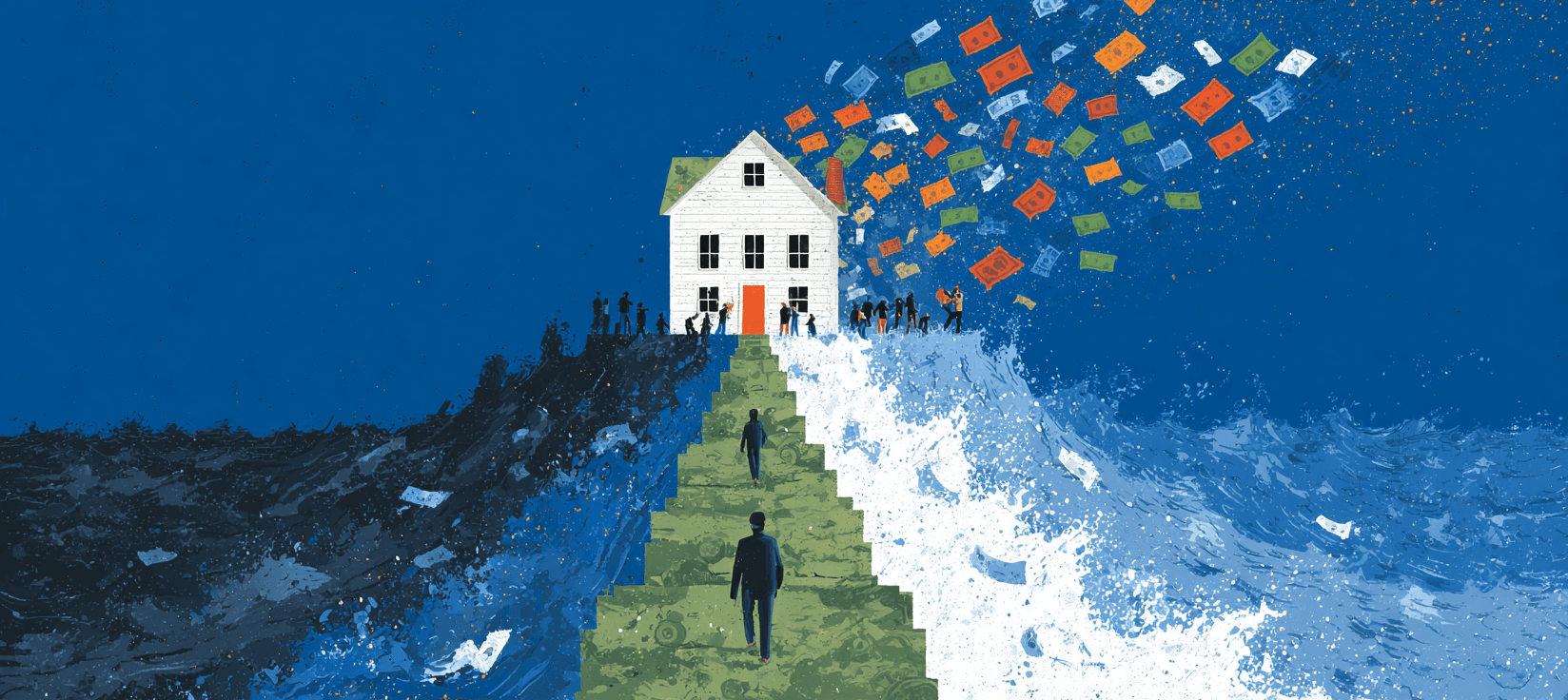
Lia Frenchman's house shakes when big waves hit the seawall at high tide. She bought it in 2020 knowing this—knowing First Avenue sits closest to the ocean, knowing king tides flood the street every winter now, knowing tsunami models show 40-50 feet of potential inundation across Taholah's lower village. But housing is scarce on the Quinault reservation. Some four-bedroom homes house twenty people. When you find a place for your family, you take it.
Now 35 homes are under construction half a mile uphill—the first residential building in the Quinault Indian Nation's decades-long relocation from tsunami zone to higher ground. Frenchman has a good job. She doesn't know if she can afford one. The homes are rising. She has to decide whether to try.
"When those floods started happening every year, it was kind of like, okay, this street really is done. First Avenue is literally in the ocean at this point."
The Numbers That Don't Work
The Quinault have been planning this move since the early 2000s, carving streets and utilities into tribal timberlands above the current village. Infrastructure is in place. The federal government announced $25 million in relocation funding. But Ryan Hendricks, the tribal council member overseeing construction, has been direct about what those homes will cost: somewhere between $350,000 and $400,000 each.
For most tribal members, whose incomes average about half the national rate, those numbers are out of reach. Even tribal president Guy Capoeman, 54, hasn't decided whether he'll move from the lower village.
"At my age, the thought of taking on a home loan is something that is—you know, it's a big investment."
The tribe is working through individual solutions—how to help people who've paid off mortgages, how to support families who can't afford new loans, whether the nation will buy homes in the lower village. Hendricks acknowledges they "still must work through these scenarios and come up with individual solutions." The homes are being built now.
Frenchman knows what her job as a parent requires:
"To make sure that my kids are in the safest place as possible. And I think it's just very apparent and very obvious that our street is no longer that safe."
Her kids' schools sit at sea level, in the flooding zone. When king tides come—the highest tides of the year, now topping the seawall regularly—tribal government evacuates families at 11pm, knocking on doors, telling people to leave. Waves deposit driftwood logs into backyards. In 2022, tidal flooding forced evacuations, with the tribe putting up elders at its casino 25 miles down the coast.
"It is inevitable that my street will be in the ocean at some point," Frenchman said.
Every Year Now
King tides that used to be rare now flood First Avenue annually. What made sense in 2020 when Frenchman bought the house—the calculation that she could live with the risk—has come apart in the years since.
Global sea levels have risen about seven inches over the past century, with similar rise forecast in just the next 30 years. The river seems higher than it used to, eroding the bank. The glacier that feeds the Quinault River and supports the salmon runs central to tribal culture is disappearing.
Kaylah Mail lives in her grandparents' home right next to the river. She's leaving.
"There's been king tides where they've evacuated us, came to our house, knocking on the door at 11 at night saying, 'You need to leave your house!' It's nerve-wracking, it's terrifying and my kids are absolutely the first thing I think about."
The Cascadia Subduction Zone runs 50 miles offshore. Scientists estimate over 40 major earthquakes there in the last 10,000 years, the most recent in 1700. Taholah sits seven feet above sea level. A tsunami event would be catastrophic. The king tides, though—predictable, annual, getting higher—force the daily reckoning.
Building the Upper Village
The Quinault people have lived at the mouth of the Quinault River for millennia. They're known as the "People of the Sand." The new village site sits half a mile uphill, still close enough to the river that fishing and canoeing can continue. The tribe plans to maintain access to traditional beaches, basket-weaving material plots, salmon baking pits. Youth leaders are working to build a traditional longhouse in the upper village. Longhouses haven't existed in the nation in almost a century.
Translating the culture of the lower village to the upper village requires families willing to be first. To take on mortgages they're not sure they can afford. To leave homes where their grandparents lived.
Tanya Eison-Pelach, who studied ocean policy in grad school, wanted to move back to Taholah after college. She realized "that's not a place that I would feel safe raising a family." She describes arguments with her mother about the family home: "No, Mom, we shouldn't put $15,000 into this because it's going to be washed away."
The generational divide runs through families. What do you tell your kids about investing in a place you know won't last? What do they learn about home when you're teaching them it's temporary?
Frenchman knows her street will be in the ocean. She knows her job as a parent. She has a good job, but she doesn't know if the numbers work. Thirty-five homes are being built. Someone will move into them. She's trying to figure out if she can be one of them, or if she'll stay on First Avenue, teaching her children what it means to live in a place that's already leaving.
The house shakes when waves hit the seawall. The homes are rising. She's deciding.
Things to follow up on...
-
Cultural infrastructure remains vulnerable: Most of Taholah's critical buildings—the K-12 school, community center, police station, courts, museum, and the only store and gas station—still sit in the tsunami inundation zone with no documented timeline for relocation.
-
Queets Village faces similar decisions: The smaller Quinault village of Queets recently completed its relocation master plan and plans to break ground on its own Generations Building, a 10,000-square-foot facility costing around $4.5 million.
-
Salmon runs declining sharply: The endemic blueback salmon runs in the Quinault River have dropped to a fraction of historical numbers, traced largely to the loss of the Anderson Glacier that feeds the river system.
-
Traditional longhouse project underway: Youth leaders are spearheading an effort to build a traditional longhouse in the upper village, which would be the first in the nation in almost a century and serve as a central gathering place.