

What Baltimore's Sanitation Workers Know About 5 a.m.


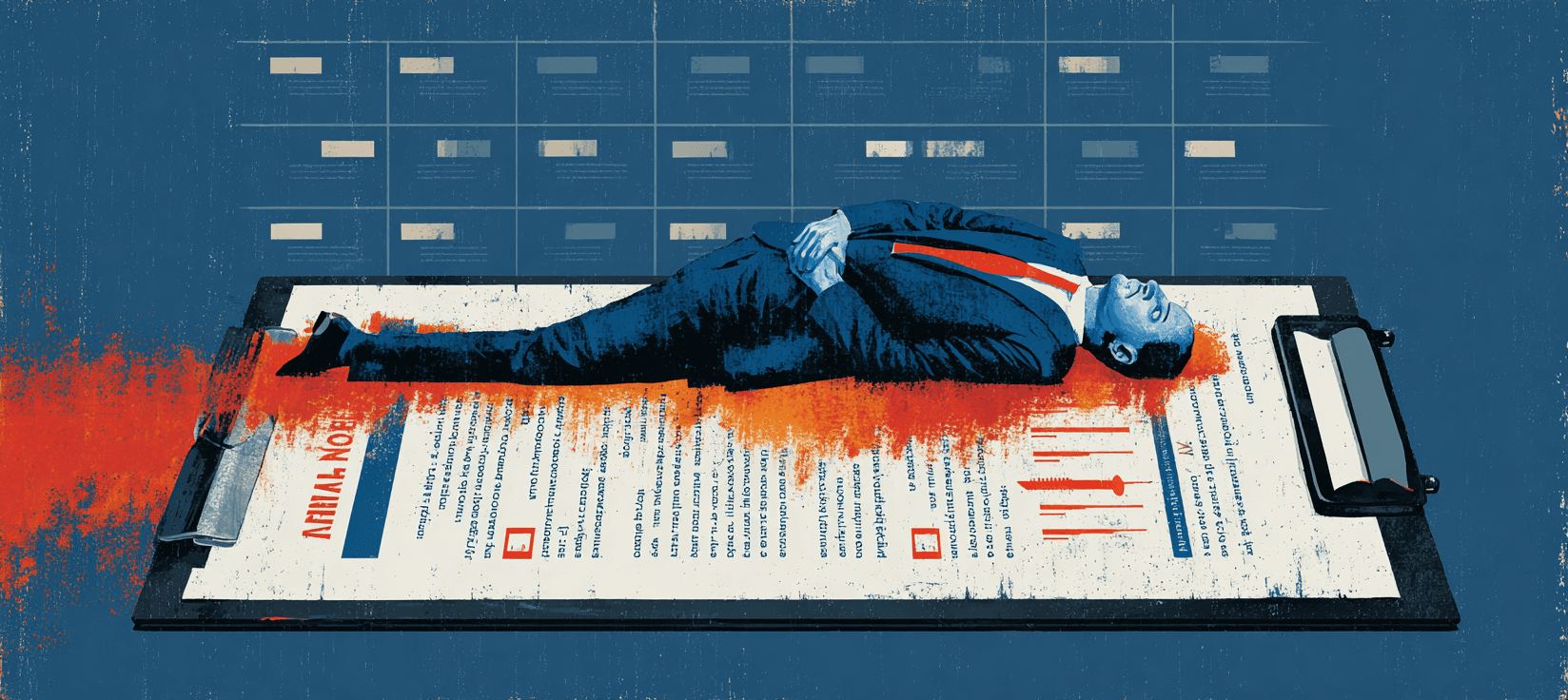
Baltimore's garbage trucks roll out at 5 a.m. now, before dawn, before the city wakes. Street lights still on, bars closing, the hum of restaurant refrigeration. This is the hour the city chose after Ronald Silver II died on his route in August 2024. One hour earlier than the 6 a.m. starts that had been standard for decades. One hour bought against the heat. But what sanitation workers are learning in that predawn darkness—about routes, about bodies, about summer itself—isn't in any manual yet.
What Baltimore's Sanitation Workers Know About 5 a.m.
Baltimore's garbage trucks roll out at 5 a.m. now, before dawn, before the city wakes. Street lights still on, bars closing, the hum of restaurant refrigeration. This is the hour the city chose after Ronald Silver II died on his route in August 2024. One hour earlier than the 6 a.m. starts that had been standard for decades. One hour bought against the heat. But what sanitation workers are learning in that predawn darkness—about routes, about bodies, about summer itself—isn't in any manual yet.

This Week's System Shock

Federal infrastructure authorizations expire this year. What replaces them looks different: government guarantees and insurance products designed to attract private capital rather than direct public spending. The shift sounds technical until you realize what it means. Projects now need to promise returns, not just solve problems.
Flood barriers paired with waterfront development get funded. Toll roads doubling as evacuation routes get funded. Wetland restoration that protects poor neighborhoods but generates no revenue? That's a harder sell. Communities with strong municipal credit can navigate these financing structures. Those without wait longer for smaller projects.
The timeline problem is straightforward. Complex financing packages take years to assemble. Climate impacts are not waiting.
What Mainstream Coverage Misses


Research Reshaping Risk Calculations
Adaptation Effectiveness Collapses Above 1.5°C Warming
Flood barriers and drought systems designed for today's conditions become inadequate as temperatures exceed their design assumptions.
Adaptation works only within specific temperature ranges, making it a complement to emissions reduction rather than a replacement strategy.
Research Reshaping Risk Calculations
First Short-Term Climate Scenarios Cover 3-5 Year Horizons
These scenarios cover mortgage terms, business investments, and insurance contracts rather than distant projections.
The NGFS represents 135 central banks and supervisors whose scenarios will likely shape how lenders assess your property and business risks.
Research Reshaping Risk Calculations
Sea Dikes Outperform Other Flood Protection by 5-10x
Sea dikes prove both more effective and cheaper than levees, giving concrete data for weighing infrastructure investments in vulnerable areas.
Covering all 4.1 billion climate-exposed people requires $540 billion annually, nearly triple the $190 billion currently protecting 1.2 billion people.
Research Reshaping Risk Calculations
Arctic Supply Routes Face 51% Serviceability Decline
Infrastructure designed for vanished climate conditions now struggles to move supplies into northern communities and extract resources out.
The study introduces "supply chain serviceability" as a metric combining transportation vulnerabilities with disruption threats for assessing logistics climate impacts.
Past Articles
Security guards at the Paris Las Vegas bus stops wear bulletproof vests that don't breathe. The bus stops don't hav...

The permit application sits on Tom Breslin's desk: new house, three blocks from where Hurricane Michael erased his ...

Kim Roberson wrote the letter in April because somebody had to explain what the numbers meant for Lawrence County, ...

The letter from Citizens Property Insurance gives Carmen Ruiz thirty days. She's being transferred to a company call...