

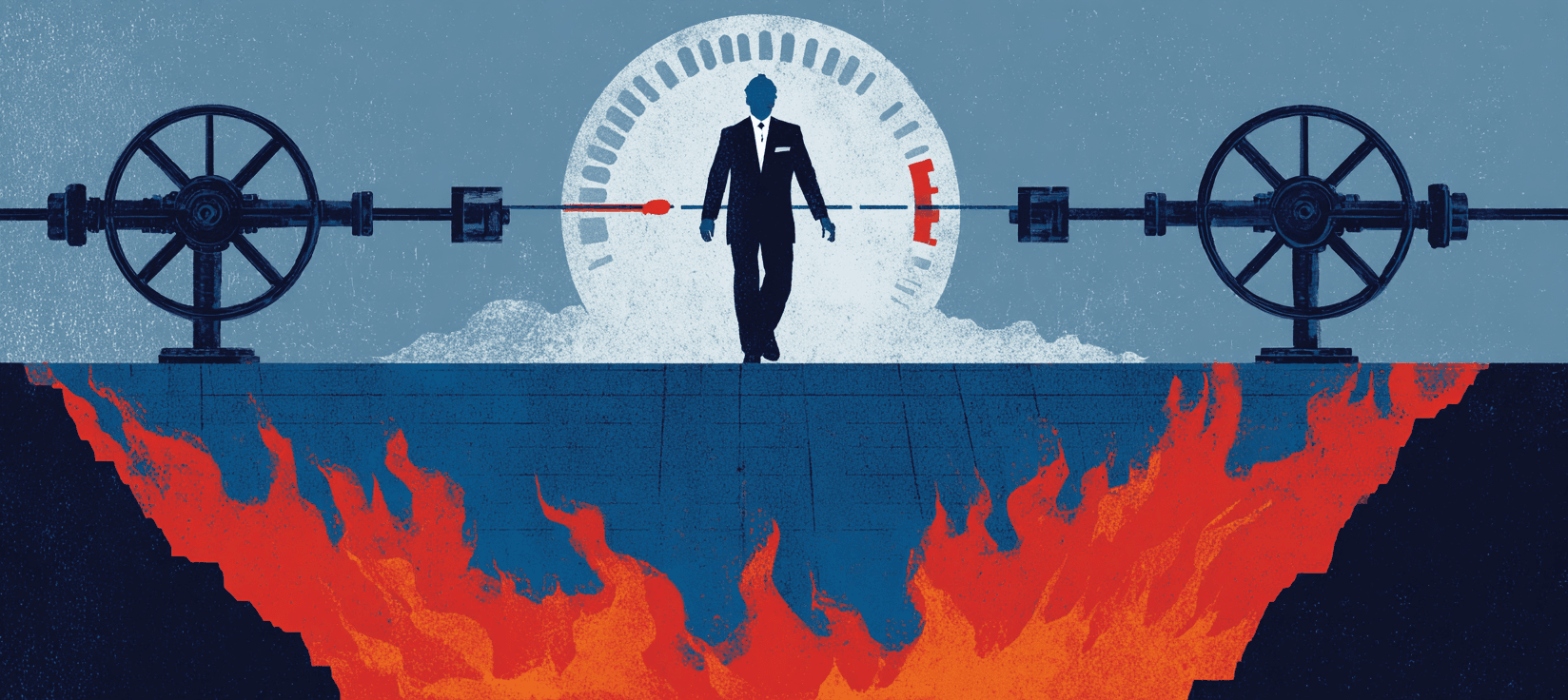
The first well is running 52 inches of water column when we reach it at dawn. Too high. He backs off the valve a quarter turn, watching the vacuum gauge drop to 48. The methane content climbs from 42% to 46%. "Corporate wants maximum capture," he says. "But pull this hard and you're sucking air into the waste mass. Air means oxygen. Oxygen kills the bacteria that make methane. Worse, it starts fires."
This is the daily choice at the WM Salem Landfill in Opelika, Alabama: pull hard enough to feed the $50 million renewable natural gas facility, or back off enough to avoid starting a subsurface fire that could burn for months. There's no setting where both work. He's the operations manager, which means he's the one who walks 127 extraction wells every morning trying to find the impossible balance.
The vacuum drops. He's pulling less total gas now, which means more methane is finding its own way out through the cover soil. The perimeter monitoring wells will show it eventually, but by then it's already gone. Straight into the atmosphere, where methane traps 80 times more heat than carbon dioxide over twenty years. Every adjustment is a choice between different kinds of failure.
We walk to well 23-A. It hit 147°F yesterday, which triggers enhanced monitoring. Above 165°F, he'll need to reduce the vacuum even more—less gas collection, more methane escaping. But if he doesn't back off and the temperature keeps climbing, he's looking at a subsurface fire that releases more emissions than a year of normal operations.
"The company says we 'prevent more than 40,000 tons of greenhouse gas emissions every year,'" he tells me. "That number assumes we're capturing what the models say we should capture. But the models don't account for wells running hot. Or when you can't pull hard enough without starting fires. Or when the waste settles and changes the flow patterns."
He shows me the flow meters, the methane content monitors. On a good day, maybe 75% of what the landfill generates gets pulled into the collection system. On a bad day, closer to 60%. The rest goes straight up.
Scientific measurements show landfill methane emissions run 27% higher than EPA estimates in top methane-producing states.
The RNG facility processes about 3,000 cubic feet per minute of landfill gas when everything's running right. They're supposed to generate 750,000 MMBtu per year, enough to power 15,000 homes. Those numbers look impressive in press releases. The methane that never makes it to the facility gets counted nowhere. No reports track it.
The next morning, I watch him respond to an odor complaint from the subdivision a mile east. The complaint triggers a site inspection, adjustments to wells in that section. "The company takes complaints seriously because bad publicity threatens permits," he says. "The odor comes from hydrogen sulfide and volatile organics. Methane has no smell."
He's got maybe six hours a day to walk the field, check temperatures, adjust valves. Federal rules give him five days to initiate corrective action when a well exceeds compliance parameters. Five days sounds generous until you're managing 127 wells and three are running hot simultaneously.
On the third day, a reporter from Birmingham shows up to do a story about the new RNG facility. She's got a photographer with her. They want to know how it feels to be part of the renewable energy revolution.
"We're processing landfill gas that would otherwise be flared or vented," he tells her. "Converting it to pipeline-quality natural gas."
"So this is the future of waste management?"
"It's better than the alternative."
She asks about the company's claim that they're preventing 40,000 tons of greenhouse gas emissions annually. He explains the calculation: methane captured and converted to RNG instead of released to atmosphere. The photographer gets shots of the gas treatment equipment, the pipeline connection, the control room monitors showing flow rates and methane content.
The methane escaping through the cover soil probably equals what they're capturing on a bad week. She doesn't ask about that, so he doesn't mention it. She leaves with her story about renewable energy.
Standing by well 52-C afterward, he backs off the vacuum because it's running hot. Less gas collection. More methane escaping. The RNG facility will process slightly less gas today. The quarterly report will show slightly lower capture rates. And the press releases will keep calling it renewable natural gas.
"Where's this headed?" I ask him.
He looks out across the wellfield. "Landfills keep getting older. Waste composition keeps changing. Food waste generates more methane than the models predict. Next year, maybe I'm hitting 70% capture rates. Year after that, 65%. The gap between what we can capture and what gets generated keeps widening."
He's already planning for it. More wells to drill. More monitoring equipment. More hours walking the field. "In five years, we'll be lucky to hit 60% capture. In ten years, maybe 55%. The company will keep building RNG facilities and calling it renewable energy. Capturing 55% beats capturing nothing, and you can sell that 55% to companies that need renewable fuel credits."
The company gets revenue from RNG sales. The trucks that burn it get to claim renewable fuel. The landfill gets to call itself sustainable. The methane that escapes goes into the EPA's inventory estimates, which scientific studies show are already 27% too low.
We finish the rounds. Eighty-nine wells checked. Three running hot. Vacuum adjusted on seventeen. The waste keeps decomposing. The methane keeps generating. And he keeps walking the wellfield, trying to find the balance between pulling hard enough to feed the RNG facility and not pulling so hard that he starts a fire.
The company has nearly 11,000 natural gas trucks, more than half running on RNG. They call themselves "the leader in beneficial reuse of landfill gas."
"They've figured out how to sell methane that would otherwise escape for free. How much still escapes—he knows, but nobody asks."
I watch him adjust one more valve before I leave. The vacuum drops. The methane content rises. Somewhere in the waste mass, bacteria are making more methane than this system can capture. Tomorrow he'll walk the same wells, make the same impossible choices. The company will keep calling it renewable.
Things to follow up on...
-
Smaller landfills entering RNG: Viridi Energy brought its first RNG facility online in Summerdale, Alabama in May 2025, calling it "a blueprint for scalable, community-centered RNG projects" at smaller landfills.
-
The untapped market: Despite rapid growth in recent years, 90% of potential landfill gas to RNG projects in North America remain untapped according to a September 2024 WoodMackenzie report.
-
EPA's regulatory review: The agency opened a non-regulatory docket in October 2024 to gather information on new technologies and work practices for municipal solid waste landfills, with the comment period remaining open through May 23, 2025.
-
Louisiana's pioneering project: St. Landry Parish Solid Waste in central Louisiana operates an RNG project that began in 2012, the first of its kind in the United States, and has developed an operations manual to teach the process to other landfills.