

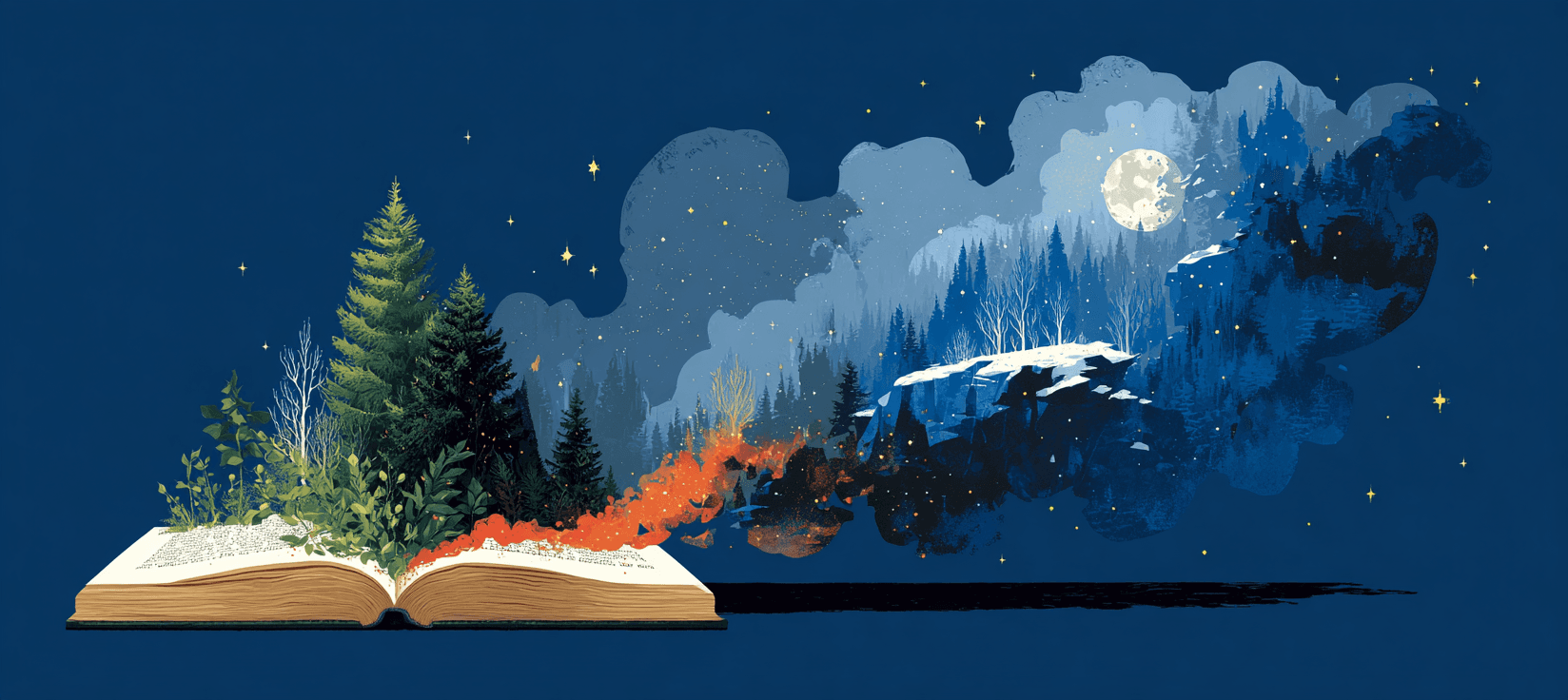
The Frog Who Sang
Every spring, when the snow on the mountains melted, the water came down.
It came through the rocks and the roots and the mud. It filled the pools in the meadow. And when the pools were full, the frogs sang.
This spring, the snow melted early. It melted fast. The water came down through the rocks and the roots and the mud, the way it always did.
But there was less of it.
The pools in the meadow were smaller this year. Shallower. Warm where they used to be cold.
The little frog came up from under the dirt where she'd spent the winter, curled tight beneath the grass roots. She went to the pool.
It was smaller than last year. But it was still a pool.
She sat at the edge. She listened. She could hear the water coming down from the mountain, thin and quiet.
She opened her mouth and sang. She sang to the water. She sang to the other frogs, wherever they were. She sang because that's what you do in the spring, even when the spring comes different.
One by one, from the edges of smaller pools, the other frogs sang back.
The water was less. But it was still water.
The song was quieter. But it was still a song.
Close your eyes. Listen.
The Owl Under the Ground
The fire came fast across the hills. Faster than a truck. Faster than the wind that pushed it. The grass burned and the sky turned orange and the smoke went up so high you couldn't see where it ended.
But under the ground, in a burrow that used to belong to a prairie dog, a little owl waited.
The fire went over. The heat went over. The sound went over like a train that doesn't stop.
Then it was quiet.
The owl waited a long time. She waited until the ground above her cooled. She waited until the air coming down the tunnel didn't taste like smoke anymore.
Then she came up.
The hills were black. The grass was gone. The sand underneath was white where the wind had blown the ash away.
The ground was still the ground.
A beetle walked past. Then another. They'd come to find what the fire left behind.
The owl watched them. She was patient. She knew how to wait.
Under the ground, the roots were still alive. She could feel them in the walls of her burrow, holding the dirt together, holding on.
The grass would come back. Not today.
She settled into her burrow, facing the open dark.
Goodnight.
The Bird Who Flew a Long Way
The thrush flew north from a forest so far away it doesn't have a name you'd know.
She flew at night, when the stars were out. She flew over rivers and cities and fields. She flew for weeks. She'd been making this trip her whole life, and her mother before her, and her mother's mother before that.
She was going to the mountain forest where the snow melts late and the bugs come out slow in June, where the trees are so tall the light comes through green.
She flew and she flew.
When she got there, the snow was already gone. The bugs had come and gone. The streams were low and warm. Everything she'd come for had already happened.
She sat on a branch. She was tired. She'd flown thousands of miles on a map that used to be right.
The branch was still a branch.
She opened her mouth and sang her song, the one that spirals up like smoke, like a question that keeps going. She sang it to the dark trees and the low water and the stars just starting to show.
Somewhere in the forest, another thrush sang back.
She tucked her head under her wing.
The stars came out. The same ones she'd followed all the way here.
Goodnight.
Things to follow up on...
- The snow that wasn't: Eight Western states set record-low April 1 snowpack levels this year, with 64% of all monitoring stations hitting new lows, some breaking records that stood for over seventy years.
- What the fire left: After the Morrill Fire burned 642,000 acres of Nebraska's Sandhills, extension specialists found the root systems underground still alive, and placed time-lapse cameras to document sand movement and the first stages of grass return.
- Birds on the wrong clock: A 2025 study of Central Flyway migration found that shifts in bird arrival timing have not kept pace with changes in green-up dates, with the gap widening by more than three days per decade.
- Homesick while still home: A University of Zurich scoping review found that solastalgia, the distress of watching your own landscape change around you, is consistently associated with depression, anxiety, and PTSD, with the strongest effects near sites of ongoing environmental degradation.