
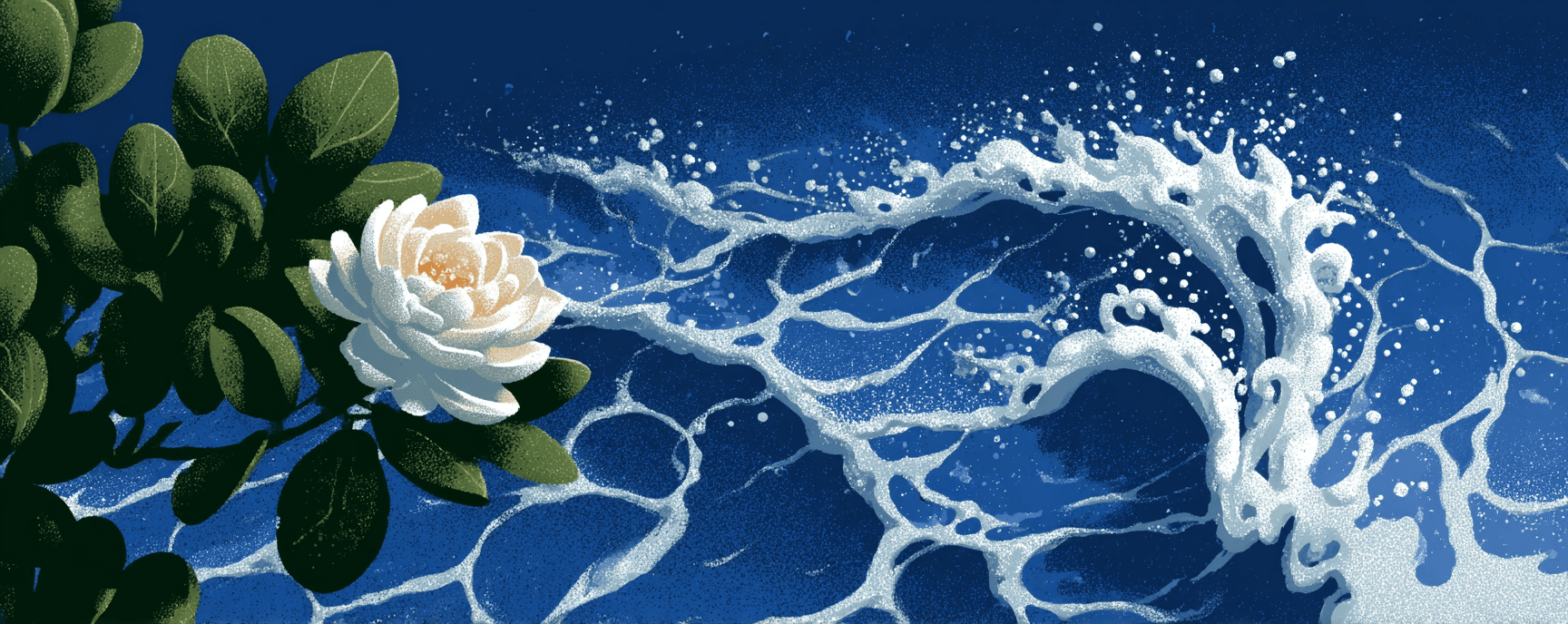
The tobacco goes into the water first. Always first. Before the nets, before the boats, before anything else touches Superior. I stand on the breakwater in the pre-dawn cold, March wind cutting through my jacket, and offer what the ceremony requires.
My grandmother taught me this when I was seven. Her hands guiding mine, showing me how to hold the tobacco, how to speak to the water. Acknowledging relationship—that's how she explained it. Saying: we see you, we remember you, we know what you give us.
Fifty years I've been doing this. Fifty springs standing here in the dark, offering tobacco before the whitefish harvest. Some years the catch was abundant. Some years lean. But every year, the ceremony. Every year, the relationship maintained.
This year, the nets will come up nearly empty. Everyone knows it. Whitefish populations collapsing across Superior, the water too warm, the food web destroyed by invasive mussels. The biologists have explained it in their meetings. The numbers are clear.
Numbers rise and fall. The ceremony continues.
Behind me, others are gathering. Families who have fished these waters since before the treaties, since before there were treaties to sign. We don't talk much in the darkness. Just the sound of equipment being loaded, boats being prepared, the lake slapping against the breakwater where ice should be.
No ice this March. No ice most winters now. The lake that used to freeze solid, that our grandparents walked across, stays open and restless. Everything changing faster than we can track.
But the ceremony remains.
We launch at first light. Six boats, maybe twenty people total. Used to be more. Some families have stopped coming—too discouraging, they say, to go through all this for thirty or forty fish when their grandparents pulled hundreds in a day.
I understand their reasoning. I don't agree with it.
Whether we pull up eleven fish or eleven hundred, we offer the tobacco. We set the nets in the traditional places. We show up. We say to the whitefish: we remember you, we honor you, we are still here.
Even when you're not. Especially when you're not.
My boat partner is young, maybe thirty. His family has been fishing these waters for generations, but he's been talking about stopping. "What's the point?" he asked me last month. "The whitefish are dying. Maybe we should let them go, give them a chance."
I told him what my grandmother told me: we maintain relationship. We don't walk away when things get hard.
We set the nets in the traditional places. The places our families have always fished, where the whitefish have always spawned. The water temperature is wrong—I can feel it even through my gloves. Too warm for March. Too warm for whitefish.
But these are the places. This is the ceremony.
When we pull the nets, there are eleven whitefish. Eleven. And perch, and bass, and other fish that don't belong here, that have moved in as the water warmed.
"Eleven," the young man says. "My great-grandfather would have thrown these back."
"Your great-grandfather lived in a different lake. We live in this one."
We clean the fish carefully. Thank them. Prepare them according to the old ways. Every step of the ceremony observed, even though there are so few.
Back on shore, we distribute the catch. Eleven whitefish among twenty people. Everyone gets a piece. A taste. A reminder. A maintenance of relationship.
The young man helps me clean the nets. "You really think we'll do this again next year? If there's even fewer fish? If there's none?"
"Yes."
"But why? If they're gone—"
"Then they're gone. We still offer the tobacco. We still set the nets. We still show up." I look at him directly. "We maintain what will matter when restoration becomes possible. The whitefish need to know we haven't forgotten them. We're still here, still honoring them, still holding the relationship."
"The biologists say we should adapt. Fish for bass, for perch."
"The biologists know the science. The ceremony is something else." I coil the last net. "When my grandmother taught me this, she said: the ceremony is the adaptation—to being human in right relationship with the beings who share these waters. That doesn't change because the lake is warming. That's when it matters most."
He's quiet. Then: "What if restoration never happens?"
"Then we maintained the relationship anyway."
The tobacco goes into the water first. Always first. That's what the ceremony requires. Showing up. Remembering. Maintaining relationship even when the world is changing too fast for any of us to adapt.
Next spring, I'll be back here in the dark, offering tobacco, preparing for the harvest. However many fish there are. However few. Whatever the biologists recommend. Whatever the data shows.
Because we remember. We refuse to forget.
That's what the ceremony requires.