

The rental car's GPS kept trying to route me down roads that don't go through anymore. I turned it off after the third correction and drove from memory, which was worse.
Eight years. My sister Elaine handled the arrangements, the church, the plot. She'd been handling things for a long time. I flew in that morning for the funeral and the gathering after, which in our family meant the house, and food, and people in every room until someone finally said they should go.
The town was there. It hadn't gone anywhere. But houses I remembered at ground level were up on pilings now, ten or twelve feet, with the space underneath latticed off or just open. Some were still at grade, and the ones that were up and the ones that weren't made a pattern on each block I could read but didn't want to.
The oaks on Decatur Street were gone. The whole corridor, the canopy that used to make the light green in summer. Smaller trees I didn't recognize had replaced some of them. Other yards just open sky where shade used to be. My mother never mentioned it on the phone. She didn't call about the oaks because by the time they were gone she'd been watching them go for years. I never asked.
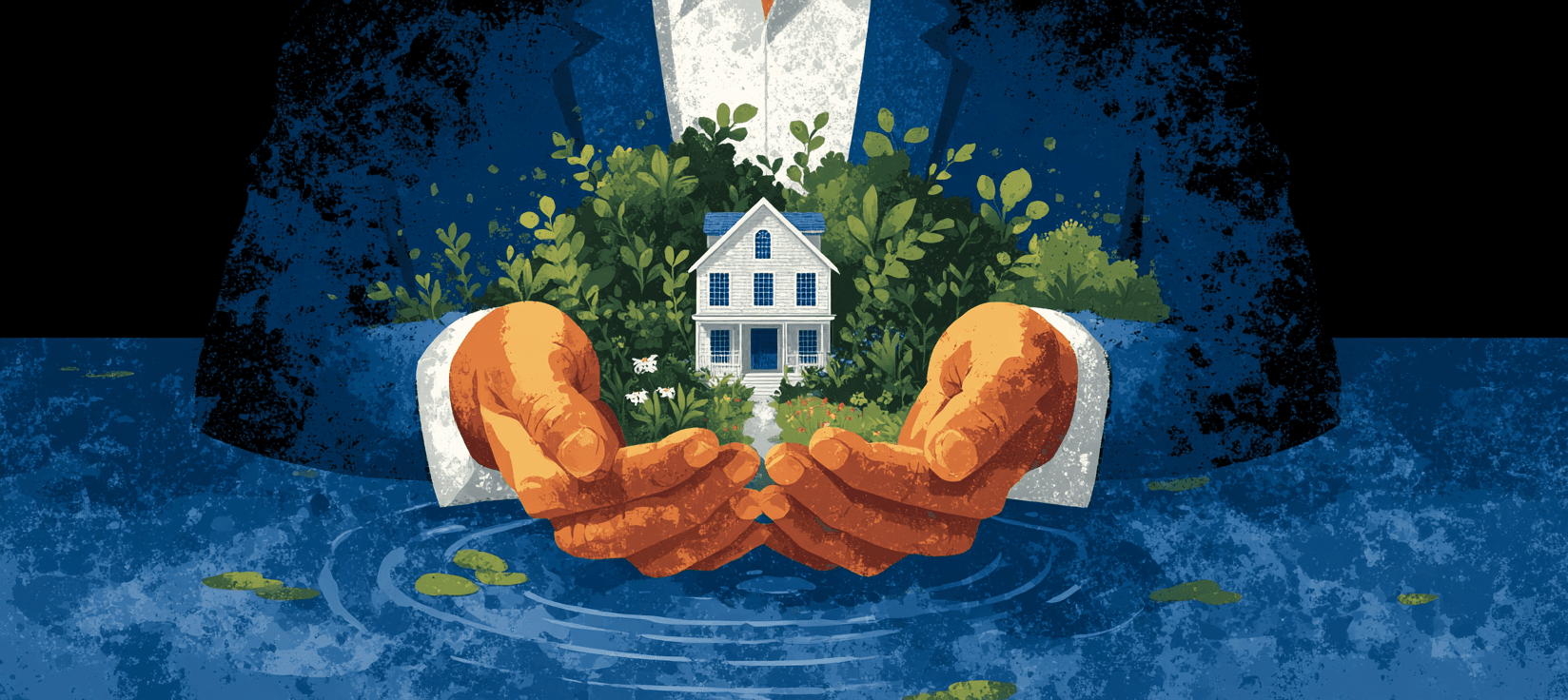
Her house wasn't elevated. Elaine told me later they'd looked into it but the cost was more than the house was worth. So it sat on its slab, and the houses on either side were up on new pilings, and hers was between them like a tooth that hadn't come in.
Inside, the gathering was going. Maybe thirty people. Brisket and red beans and a ham and three kinds of pie on the counter. The AC was working hard. I remembered these gatherings spilling onto the porch and into the yard, but everyone was inside. A hundred and four all week, Elaine said, like she was telling me the time.
I went to the kitchen for water from the tap. I'd been drinking from that tap my whole life. It tasted like something. Mineral, or treated, or just different. I stood there with the glass and noticed a second faucet I'd never seen, smaller, mounted next to the main one. A filtration unit bolted under the sink. I poured out what I had and filled from the smaller one. It tasted like water.
That you had to know which faucet. That there was a wrong one now. I stood there with it.
After most people left I drove out to the cemetery. They'd buried her that morning. The cemetery had lost its trees too, big oaks gone to salt. The headstones looked exposed without them, like furniture in an empty room. Some of the older plots near the back edge were close to standing water I was pretty sure used to be ground. The air above it had a sulfur smell, faint, like something underneath had turned. I breathed it and couldn't stop breathing it. Her plot was on higher ground. Elaine had made sure of that. I stood there for a while. The heat was something you wore.
I drove back. Elaine had cleaned up and gone home. She'd come by in the morning.
I sat in the kitchen with the lights off. The AC cycled on and off. Through the window I could see the underside of the neighbor's elevated house, the pilings, a motion-sensor light clicking on and off as something moved through the lattice below. My mother's house sat at the level it always had, low and still.
I drank water from the right faucet. I figured by morning I'd reach for it without thinking. Everybody does.
Things to follow up on...
-
Ghost forests, Gulf Coast: Large swaths of coastal oaks and bald cypress across South Louisiana have been killed by saltwater intrusion, creating what locals call "ghost forests" — a transformation documented across the entire Eastern seaboard.
-
The wrong faucet, statewide: During the 2023 Mississippi River saltwater wedge, New Orleans-area residents discovered their tap water had crossed the 250 mg/L salinity threshold, prompting emergency guidance on which water was safe to drink, cook with, or even bathe in.
-
Cemeteries going under: Researcher Jessica Schexnayder has documented 138 endangered Louisiana cemeteries, some with headstones barely visible above rising water, concluding that most will eventually end up in the Gulf of Mexico.
-
Houses that can't be sold: As insurers cancel nearly two million homeowner policies nationwide, a congressional committee has termed the climate-driven insurance crisis a "looming economic threat" with potential to trigger financial collapse comparable to 2008.