

The Engineer Who Wouldn't Build the Dam


In 256 BC, the Minjiang River flooded the Chengdu Plain for the thousandth summer running. Li Bing, new governor of freshly conquered Shu commandery, had the obvious solution staring him in the face: build a dam. That's what you did with rivers that misbehaved. Every major waterway in China had dams. Li Bing said no. What he proposed instead had never been attempted at that scale, and if his calculations were wrong, the entire region would stay flooded and useless.
The Engineer Who Wouldn't Build the Dam
In 256 BC, the Minjiang River flooded the Chengdu Plain for the thousandth summer running. Li Bing, new governor of freshly conquered Shu commandery, had the obvious solution staring him in the face: build a dam. That's what you did with rivers that misbehaved. Every major waterway in China had dams. Li Bing said no. What he proposed instead had never been attempted at that scale, and if his calculations were wrong, the entire region would stay flooded and useless.

Interview with a Fire Keeper Who Became a Criminal Overnight
CONTINUE READINGHistory Echoes This Week

Kurdistan's Dokan Dam lost 93% of its storage this fall. Hydropower stations failed first. Then gas fields were attacked. Electricity production dropped 80%. Oil field pumps stopped working. Each failure fed the next.
Angkor's engineers built something similar eight centuries ago. Channels, reservoirs, bridges spanning the Siem Reap River. When climate variability hit in the 14th century—drought, then crushing monsoons—damage didn't stay contained. Research in Science Advances found the network was "prone to cascading failure" precisely because everything connected to everything else. A bridge washes out, water carves a new course 25 feet below the old one, downstream infrastructure becomes useless, the system fragments.
Complexity creates vulnerability. Angkor didn't fall because its engineers were primitive. It fell because they built something too interconnected to fail gracefully.
Historical Climate Insights
Five Millennia of Unequal Adaptation
Technology increases adaptive capacity while simultaneously determining who gets left behind during climate stress.
Scale matters here: Current human-driven change dwarfs every climate shift examined in this 5,000-year record.
Historical Climate Insights
Prehistoric Bones Complicate Collapse Stories
Social structures and resource diversity matter more than the severity of environmental stress itself.
The method matters: Twenty-five researchers analyzed actual human remains rather than relying on archaeological proxies or assumptions.
Historical Climate Insights
Medieval Drought Echoes Modern Weather Patterns
Timing tells the story: Medieval drought preceded the Great Famine by less than a decade, showing sustained dryness destabilizes food systems.
Transitional climate phases create low-variability periods where weather patterns persist for months, amplifying impacts.
Historical Climate Insights
Cities Don't Learn From Disasters Like We Think
Past disaster experience explains only a small fraction of variation in adaptation actions across cities.
Follow the money: Affluent countries suffer greater economic damages but possess governance capacity to respond; poorer cities lack resources regardless.
Past Articles
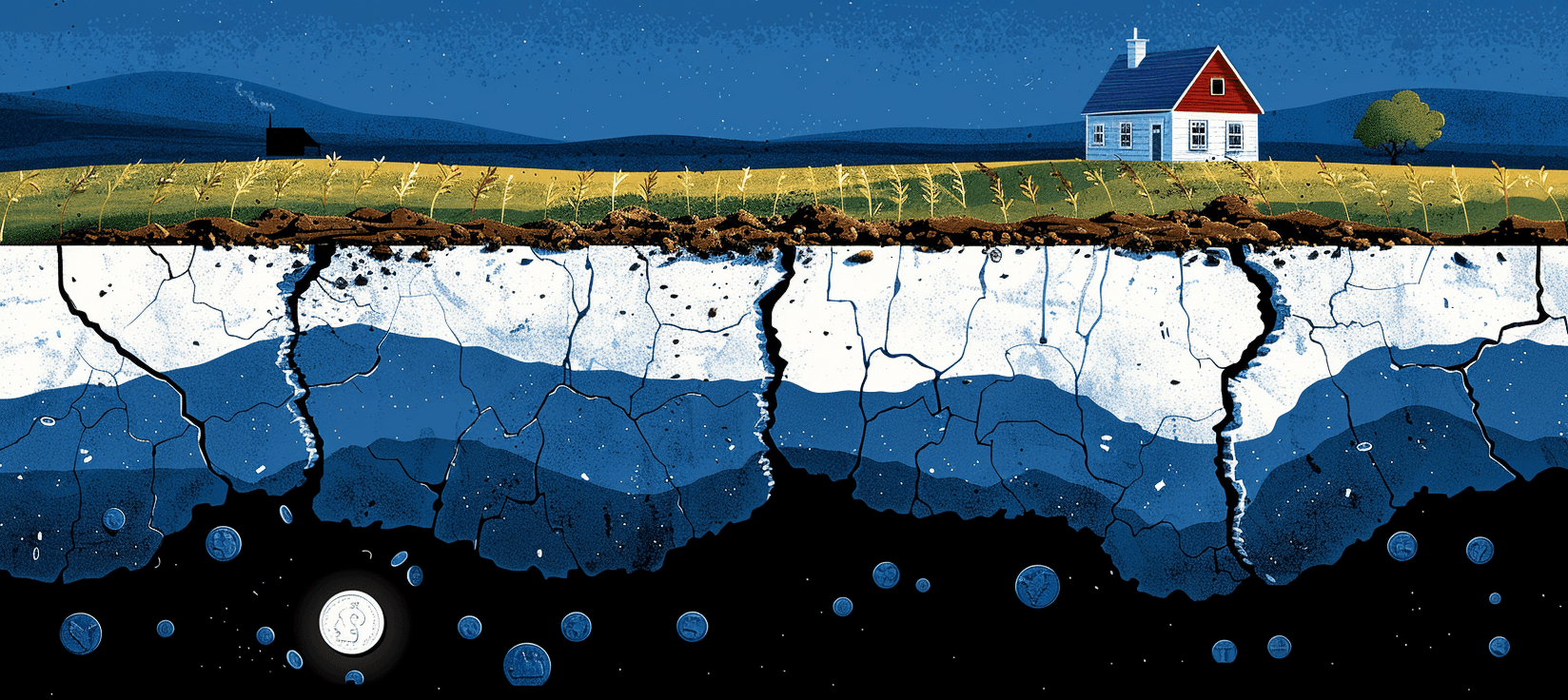
The man offered fifty cents an acre for rocks you couldn't see and couldn't use. Your corn was bringing thirty cents...

May 29, 1346. Philip VI of France issues an ordinance requiring his kingdom's forests to sustain themselves perpetu...

Lois Gibbs's hand rose toward her neighbor's door in spring 1978. The petition trembled. Who was she to demand acti...

In the early 1950s, Minamata fishermen's hands went numb while hauling nets, dropped things without warning. Their ...