

The Monster and the Famine
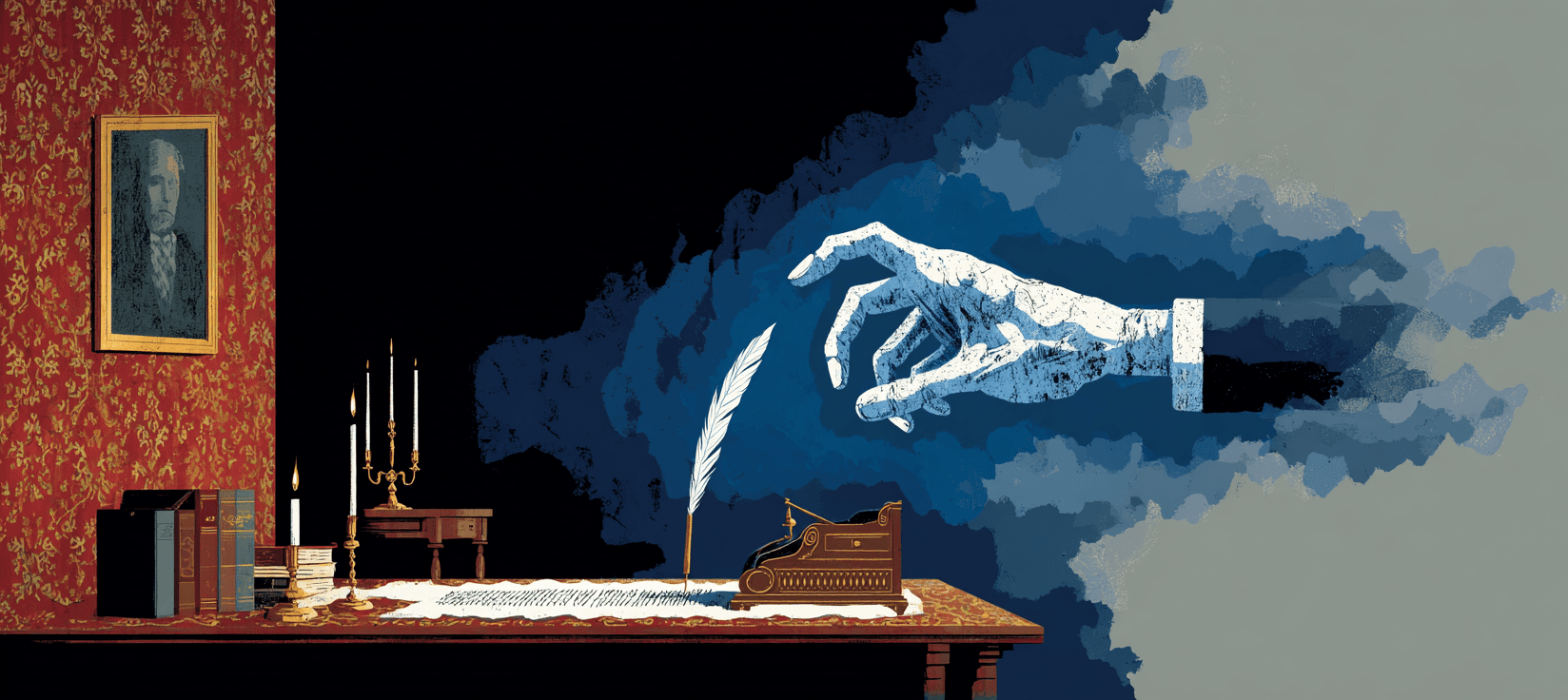
In June of 1816, five young English tourists sat by a fire above Lake Geneva and invented monsters. The rain that trapped them indoors has become the most celebrated bad weather in literary history. We teach it in universities. We make films about it. We know every detail of what happened inside that villa.
A hundred and fifty miles away, four thousand refugees were picking at animal carcasses in muddy fields. When they reached the nearest city, police beat them with swords and drove them into the forests. The same weather made both stories. Only one gets told at house parties. The other shows what governments still do when climate wrecks the food supply and panic sets in.
The Monster and the Famine
In June of 1816, five young English tourists sat by a fire above Lake Geneva and invented monsters. The rain that trapped them indoors has become the most celebrated bad weather in literary history. We teach it in universities. We make films about it. We know every detail of what happened inside that villa.
A hundred and fifty miles away, four thousand refugees were picking at animal carcasses in muddy fields. When they reached the nearest city, police beat them with swords and drove them into the forests. The same weather made both stories. Only one gets told at house parties. The other shows what governments still do when climate wrecks the food supply and panic sets in.
The Horseless Summer

Mount Tambora's 1815 eruption erased summer across the Northern Hemisphere. In Baden, the oat harvest collapsed. Horses starved by the tens of thousands. Grain shipments piled up at Mannheim's Rhine harbor with nothing alive to pull them inland.
On June 12, 1817, Baron Karl von Drais straddled a 48-pound wooden frame with two in-line wheels and a steerable front end, then covered 14 kilometers in under an hour. Twice walking speed, no oats required. The famine that killed the horse produced the operating principle behind every bicycle ever built.

The Exodus and the Gap

The Gravestone and the Wagons
In June 1816, snow fell across Vermont and New Hampshire. By August, frost had killed the corn. What followed reshaped American settlement geography: thousands of families loaded wagons for the Ohio Valley. The migration story follows the people who left. In Ashland, New Hampshire, a gravestone carved thirty-one years later remembers the man who stayed and grew forty bushels of wheat.

The Answer in the Newspaper
In February 1816, a New York newspaper printed an account of a massive volcanic eruption in the Dutch East Indies. Months later, when June snow and August frost destroyed crops across New England, nobody connected the two events. A Maine minister aimed smoked glass at the sun and carefully drew the wrong answer. The right one already existed, published thirty-two years earlier in a pamphlet nobody remembered.
Further Reading

Past Articles

The theory was elegant: squeeze the Mississippi between walls and the river digs its own channel deeper. Build levees, a...

Lee Kuan Yew took power in 1959 and immediately air-conditioned the civil service. Pure national strategy: seal the buil...

Every dimension of a New Orleans shotgun house is a calculation about heat. Twelve feet wide, rooms in a line, transom w...

On January 1, 1960, a hundred thousand people drove into the Arizona desert to evaluate a proposition about what a body ...