
The farm had been in the family since before the war—forty acres of hillside in Pike County, Kentucky that grew corn and kept hogs, a creek that ran year-round, timber enough for repairs and firewood. By the 1890s it wasn't enough anymore.
Corn that brought forty-one cents a bushel in 1874 was down to thirty cents by 1897. You planted more acres and made less money. Credit, when you could get it, cost over ten percent. The war had closed schools, wrecked trade networks, left neighbors feuding. Subsistence farming produced food but no cash for taxes, tools, the necessities you couldn't make yourself. The old self-sufficient mountain economy was coming apart.
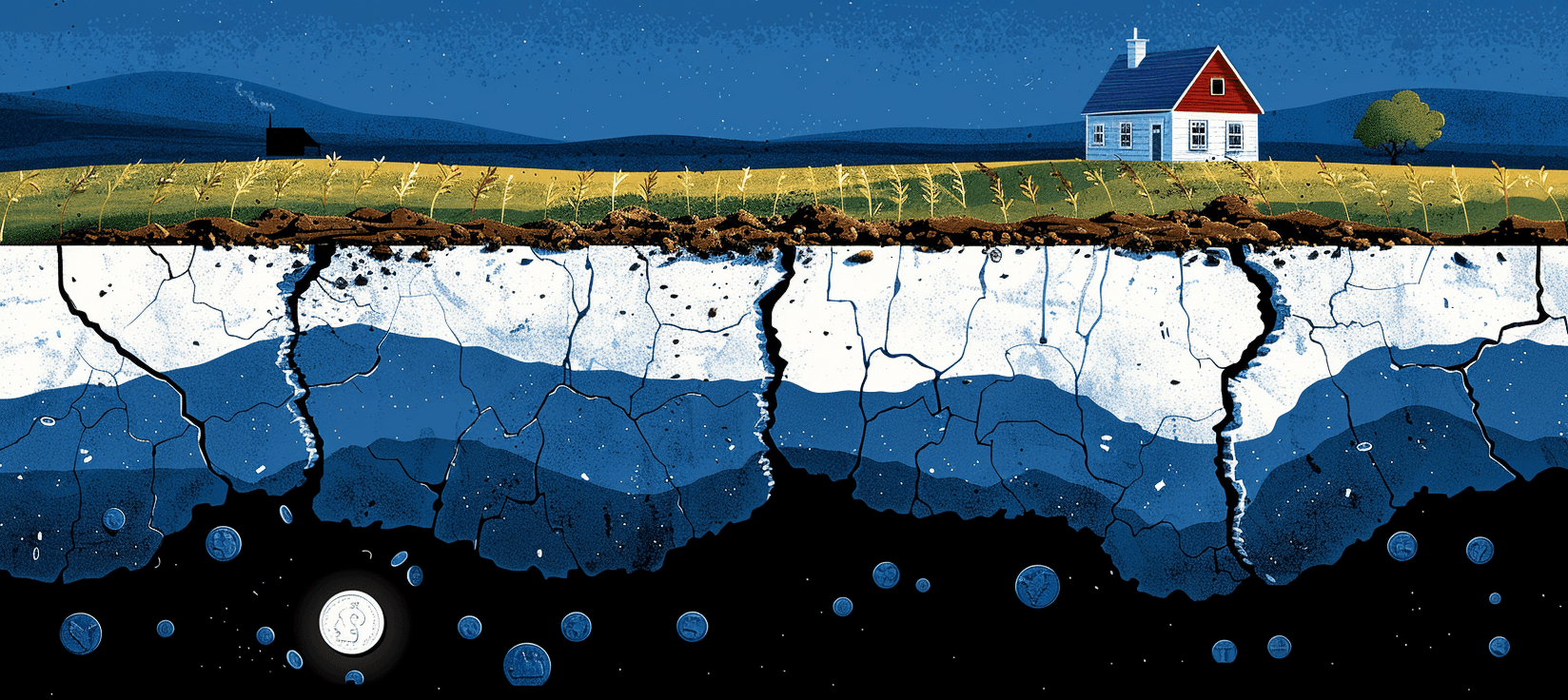
When the man showed up offering actual money for mineral rights—rocks underground you'd never see anyway—you took it. Some families got fifty cents an acre. Some got less. It was cash in hand against an abstract future claim on something you couldn't use.
That was the adaptation. Sell what you weren't using to survive what you were facing.
What nobody understood was they were signing away their descendants' ability to adapt to anything else for the next hundred and fifty years.
The Schoolteacher Who Read the Deed Books First
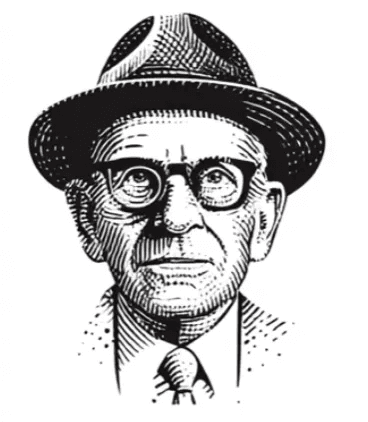
John C.C. Mayo wasn't the first person to buy mineral rights in Appalachia. He was the first to make it systematic. Born in Pike County in 1864, taught school in a log cabin starting at sixteen, made his way to Kentucky Wesleyan College where he got interested in geology and eastern Kentucky's mineral resources.
Around 1888 he figured out something simple: deed books were public records. You could look up who owned land over promising coal deposits. The library at Kentucky Wesleyan had the information. You just had to know what you were looking for and get there before anyone else thought to.
He started with his teaching salary, buying land and mineral rights, flipping them to eastern coal and iron companies at considerable profit. In 1892 he partnered up and worked at scale. His method was straightforward: identify deposits using geological knowledge, find owners through deed records, make deals through options or "agreement to purchase" that let him lock in rights before he had the capital to complete the sale.
The families he bought from were mostly poorly educated, often couldn't read. They signed deeds they didn't fully understand. Some got fractions of a dollar per acre. Mayo sold one tract to a Chicago businessman for five dollars an acre while keeping a twenty-five percent interest for himself.
By 1901 he'd founded Northern Coal and Coke Company controlling 130,000 acres in the Elkhorn Coal Field. When it sold to Consolidation Coal in 1909, he walked away wealthy.
The families weren't fools. They were drowning and someone threw them a rope with a noose tied in it. Mayo understood the system better than they did. The system let him turn that advantage into permanent control.
The Legal Innovation That Made It Stick
After some controversy in Virginia over how land was acquired, Mayo helped craft what became known as the broad form deed. As legal documents go, it did exactly what it was designed to do.
The broad form deed didn't just transfer mineral rights. It granted the holder rights to do whatever they deemed "necessary or convenient" to extract minerals. Use any infrastructure. Take any resources on the land—trees, water, whatever you needed. And the part that mattered most: freed the holder from any liability for damages to the land or water.
For decades Kentucky courts interpreted these deeds in favor of mineral owners. The 1956 case Buchanan v. Watson established that mineral owners could use any mining method, including strip mining that destroyed the surface, without the surface owner's permission or liability for damages.
Families who thought they were selling rocks underground had actually signed away their descendants' ability to object when companies wanted to blow the tops off mountains.
It took a constitutional amendment in 1988 to change this.
By then it was too late.
What Happens When You Can't Adapt Anymore
The turning point wasn't Mayo's library insight or the first deed signed. The turning point was the moment—spread across decades, different for each family—when people realized what they'd actually done.
You wanted to plant an orchard. Cleared the land, bought the trees, put in years of work waiting for them to bear. Then discovered the mineral rights owner could strip-mine through it without your permission or compensation. The deed you didn't fully understand gave them that right.
Built a barn, invested in livestock, planned to expand. The company decided to run a haul road through your property. The deed said they could. You owned the surface but someone else owned the right to destroy everything on it.
Your community wanted to attract a different industry, diversify beyond coal. Nobody would invest in land where mineral rights owners could wreck any surface development at will.
The adaptation your grandparents made to survive the 1890s eliminated every other adaptation option for generations.
The railroads came. Timber companies clear-cut the old-growth forests. Mines opened and company towns outnumbered independent towns five to one. By the early twentieth century, 78 percent of coal miners and their families lived in company-owned communities where the company owned your house, your store, your sheriff, your doctor, the cemetery where they'd bury you.
By 1920, 70 to 90 percent of Appalachia's mineral rights were corporate-owned—and a 1981 study found that nearly 75 percent of surface acres and 80 percent of minerals remained absentee owned.
Self-sufficiency became impossible. Clear-cut forests, absentee ownership, divided inheritances forced people from agrarian independence to economic dependency on a single industry. The adaptation that was supposed to bring cash into cash-starved communities actually drained wealth out for more than a century.
What This Means Now
Communities across Appalachia still don't own the wealth beneath their feet. Families still discover that ancestors they never knew signed away rights they didn't understand to resources nobody could have imagined extracting the way they're extracted now.
Here's what matters about climate adaptation: people make decisions under economic pressure with incomplete information about long-term consequences, in systems where some people understand the rules better than others.
Take carbon credits. A community facing immediate economic pressure gets offered payment for carbon sequestration capacity—something invisible, something they're not "using," something that sounds like free money for doing nothing. The contracts are complex. The long-term implications unclear. What adaptive capacity are they actually signing away? What happens in thirty years when they discover the agreement prevents them from changing land use in ways they can't predict now?
When technical experts and legal specialists show up offering deals that sound reasonable under present pressure, remember that the families in Pike County were being reasonable too. They were people under economic pressure making the best choices available with the information they had.
Mayo sat in that library and figured out how to read deed books before anyone else thought to. That moment of insight set in motion a transformation still playing out in communities that lost control of their resources generations ago.
The families who sold made the best choices available to them. The system was rigged from the moment someone figured out how to work it. We're building new systems now around climate adaptation. Some people will read the deed books first. Some people will sign documents they don't fully understand under economic pressure they can't escape.
And we'll spend the next century discovering what they actually gave away.
Things to follow up on...
-
Confederate cartographer's role: Jedidiah Hotchkiss produced detailed maps of Appalachia during the Civil War that later helped identify coal deposits for industrial development, creating an unexpected link between military intelligence and resource extraction.
-
The 1981 ownership study: The Appalachian Land Ownership Study surveyed 13 million acres and found that nearly 75 percent of surface land and 80 percent of minerals were absentee owned, with corporations paying only 4 percent of county property taxes despite owning up to 90 percent of land in some counties.
-
Company town dominance: From 1880 to 1930, over six hundred company towns were built in Appalachia, outnumbering independent towns five to one, with coal companies controlling virtually every aspect of miners' lives from housing to healthcare to burial grounds.
-
The logging boom transformation: Beginning in the 1880s, the Southern Appalachian logging boom was sponsored almost wholly with outside capital and within four decades dramatically altered both the landownership pattern and the economic and social structure of the mountains.