

Correspondence from Maine farming communities
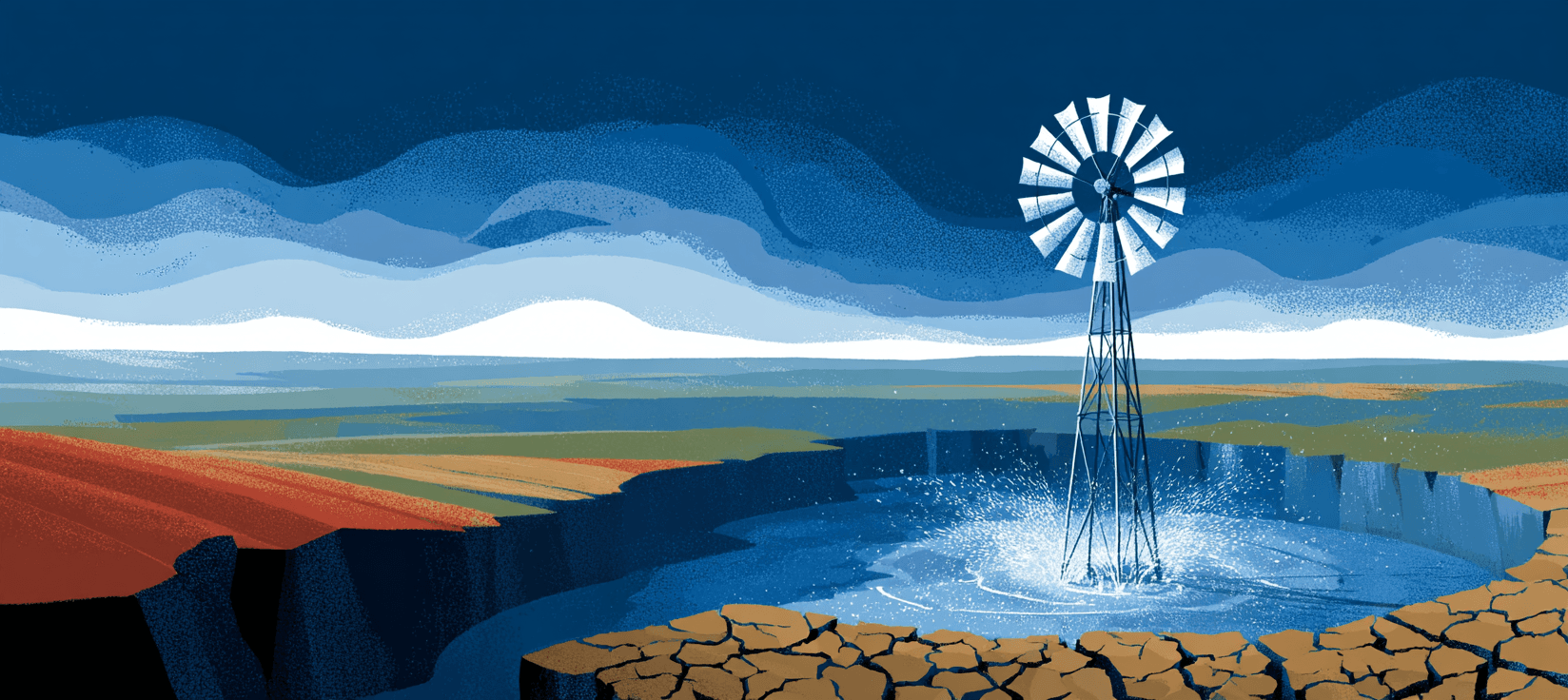
Paul Thomas's two manmade ponds are empty. They've been feeding his center pivot irrigation systems for more than a decade, but last summer they went dry in June and August. He lost about half his crop—250 acres of squash, potatoes, and rutabagas in Corinth. Third generation farmer, one of the largest rutabaga operations east of the Mississippi, supplies eighteen Hannaford stores across Maine. The ponds are supposed to hold water.
Now he's installing two more pivot systems. Over $60,000 each. Total irrigation investment north of $100,000. Plus $300 a day in diesel when they're running, pumping 1,500 gallons per minute from ponds that went dry last year.
The ponds might refill. He's installing the pivots anyway.
February in Drought Country
Corinth in February: frozen ground, empty ponds, pivot systems going in. The kind of winter where you can see what's missing—no snow cover worth mentioning, the brown showing through, the ponds that should be iced over sitting dry instead. Sixty percent of Maine is still in severe drought as of mid-December. Three percent in extreme drought. The December rains didn't help because the ground was already frozen from Millinocket north.
Frozen ground keeps water from soaking in. Whether spring snowmelt helps depends on how fast it melts. Too fast and it runs off instead of replenishing the water table. Maine Emergency Management Agency's voluntary dry well survey recorded 541 reports in 2025.
The farmers had gotten used to rain—almost ten years after the early 2000s drought were the wettest in Maine's climate record going back to 1895. Then summer 2025 hit—sixth driest on record, some parts seeing nine-inch precipitation deficits over three months.
"This is the type of year that separates the big boys from the hobby farmers, who won't have all the irrigation stuff to use."
Thomas said it directly. He's installing his irrigation stuff now, in February, during a drought in its seventh month, with frozen ground preventing water table recharge until spring.
The Money Available
Applications for Maine's Farmers Drought Relief Fund are due February 13. Eight days from now. The state has $900,000 to $1.2 million available this year, expecting 60 to 75 applications—more than double last year's 28.
| Relief Fund Coverage | Maximum Amount | What It Covers | |---|---|---|---| | Drilled wells | $25,000 (90% of costs) | Drilling deeper for water | | Storage ponds | $50,000 (90% of costs) | Building water storage | | Irrigation systems | Not covered | Pivots, pipes, pumps, distribution |
Last year the fund paid out $438,000 to 24 farms: ten got money for water planning, ten for well drilling, four for storage ponds.
The sources don't say whether Thomas is applying for pond money by the deadline. The installation is happening. The investment is being made.
The Week-Long Cycle
Forty miles southeast in Dresden, Rob Johanson spent last summer pumping water almost constantly. He and his wife Jan run Goranson Farm—certified organic, 275 summer CSA members, three generations on this land. They recently buried 3,000 feet of irrigation pipe underground, replacing the old ground-level system they used to move by hand. Hydrants every 300-400 feet. Pumps from the Eastern River.
"We would essentially irrigate the whole farm, which would take about a week," Johanson told reporters in December, "and then we would just start again."
One week to water everything. Then start over. All summer. The pump running, the river water flowing through 3,000 feet of buried pipe, the cycle never stopping because if you stop the crops die. The buried pipe system was "an enormous investment," in his words.
Thomas needs two inches of water per week for ideal crop growth. Johanson needs one inch. When you're not getting it from the sky, you pump it from somewhere else. The diesel costs $300 a day. The pivot systems cost $60,000 each. The buried pipe was enormous.
The relief fund covers wells and ponds but not distribution systems. You can get help drilling deeper or building storage. The machinery to actually irrigate? That's on you.
The Ten Percent
Only ten percent of Maine's total farmland is irrigated, according to federal estimates. Potato and blueberry fields do better—25% irrigated. Most farmers aren't set up for this. A MOFGA survey found nearly 70% of farmers intended to invest in irrigation, but more than half said they didn't have the financial resources.
Farmers who can afford six-figure irrigation investments are betting on continued drought. Those who can't are hoping wet years return.
Researchers noted that this year's drought "stood out for its rapid onset due to high temperatures, with growers commenting to scientists about how quickly soil moisture depleted."
How quickly. Thomas watched his ponds go dry in June and August. Ten years of normal became half a crop lost.
The Bet Being Made
The relief fund applications are due in eight days. Spring planting decisions are six weeks out. The frozen ground will eventually thaw. The snowmelt will soak in or run off. The ponds will refill or they won't.
Thomas has his pivot systems going in. Johanson has his buried pipes and his pump and his week-long irrigation cycles. Spring planting is six weeks out and the money's already committed.
Things to follow up on...
-
Federal disaster declaration: In November 2025, USDA declared Maine a natural disaster area, opening federal emergency loan applications with deadlines extending into May and June 2026.
-
Conservation planner shortage: Tom Gordon of Maine's Soil and Water Conservation Program noted that recent federal funding declines mean there are "relatively few" conservation planners available to help farmers design the water management plans required for relief fund applications.
-
La Niña winter forecast: Climate forecasters expect La Niña conditions to continue through winter with possible shift to neutral conditions between January and March 2026, affecting precipitation patterns across the state.
-
Precipitation outlook remains dry: Drought.gov forecasts show 40-80% chance of below-normal precipitation for Maine through spring 2026, suggesting the drought may persist into the growing season.